

Among these smart thermostats, I rank the ecobee Smart Thermostat Enhanced as the best overall for its balance of connected controls and useful home-comfort features. The Amazon Smart Thermostat stands out for Alexa-centered homes, while the Google Nest Thermostat offers a simpler, streamlined option for buyers who want familiar app-based control. The main tradeoffs are compatibility and wiring, how much automation you want, and whether you prefer a straightforward interface or more advanced features. Some models require a C-wire, and a lower-complexity thermostat may suit you better than one with extra integrations. Read on for the full breakdown and help matching a thermostat to your heating system and household.

Get home appliances delivered free with Prime
- Fast, free delivery on millions of items
- Prime Video, Amazon Music and more included
- Member-only deals all year
Complete the kit



Key Takeaways
- ecobee Smart Thermostat Enhanced leads the roundup because it balances home-comfort features and connected control without taking the premium-first approach of the amazon.com/dp/B09XXTQPXC?tag=wholehousewaterlab-20&ascsubtag=dc-1171824″ target=”_blank” rel=”nofollow sponsored noopener”>ecobee Premium.
- The Amazon Smart Thermostat is the clearest fit for Alexa and Ring households, but its C-wire requirement makes wiring checks a must before buying.
- Google Nest Smart Thermostat listings in Charcoal, Snow, Fog, and Sand offer color choices rather than four distinct feature sets, so compare the model details rather than treating finish as a capability.
- The ecobee Smart Thermostat Essential and amazon.com/dp/B0BXZ6KXGG?tag=wholehousewaterlab-20&ascsubtag=dc-1171824″ target=”_blank” rel=”nofollow sponsored noopener”>Sensi Lite ST25 represent simpler paths into connected temperature control; buyers should weigh their system needs before paying for more features.
- The two Honeywell Home color-screen models and the ecobee Premium cater to buyers who value richer displays or additional integrations, while the Riseem model is limited to single-stage 1 Heat/1 Cool systems and requires a C-wire.
| Sensi Lite Smart Wi-Fi Thermostat (ST25) | 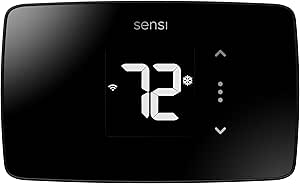 | Best for Straightforward DIY Installation | Model: ST25 | Connectivity: 2.4 GHz Wi-Fi | Control methods: App, touch, and voice | VIEW LATEST PRICE | See Our Full Breakdown |
| Riseem Wi-Fi Smart Thermostat, Single-Stage 1 Heat/1 Cool, C-Wire Required |  | Best for Basic Single-Stage Systems | Model: STN701W-Blue | System compatibility: Conventional single-stage, 1 heat/1 cool | Supported fuel types: Gas, oil, or electric | VIEW LATEST PRICE | See Our Full Breakdown |
| Amazon Smart Thermostat with Alexa and Ring Compatibility, C-Wire Required, Pack of 2 |  | Best Two-Thermostat Pack for Alexa Homes | Pack size: 2 thermostats | Smart-home compatibility: Alexa and select Alexa devices | Wiring requirement: C-wire required | VIEW LATEST PRICE | See Our Full Breakdown |
| ecobee Smart Thermostat Enhanced |  | Best for Broad HVAC and Smart-Home Compatibility | Connectivity: Wi-Fi | Display: 4-inch LCD | Voltage: 24 volts | VIEW LATEST PRICE | See Our Full Breakdown |
| Sensi ST55 Wi-Fi Smart Thermostat |  | Best for Smart-Home Platform Flexibility | Model: ST55 | Connectivity: Wi-Fi | Compatible platforms: Amazon Alexa, Apple HomeKit, Google Assistant, SmartThings, and Vera | VIEW LATEST PRICE | See Our Full Breakdown |
| Google Nest Smart Thermostat, Charcoal | 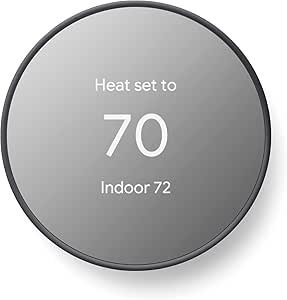 | Best for Google Home Households | Color: Charcoal | Connectivity: Wi-Fi (2.4 GHz and 5 GHz), Bluetooth Low Energy | Compatible platforms: Google Home, Google Assistant, Matter-certified voice assistants | VIEW LATEST PRICE | See Our Full Breakdown |
| Google Nest Smart Thermostat, Snow |  | Best for DIY Installation | Color: Snow | Connectivity: Wi-Fi (2.4 GHz and 5 GHz), Bluetooth Low Energy | Controller compatibility: Amazon Alexa, Android, Google Assistant, iOS | VIEW LATEST PRICE | See Our Full Breakdown |
| Honeywell Home RTH9600WF Wi-Fi Smart Color Thermostat |  | Best Touchscreen Controls | Model: RTH9600WF | Connectivity: Wi-Fi | Display: Color LCD touchscreen | VIEW LATEST PRICE | See Our Full Breakdown |
| Vine Smart Wi-Fi Thermostat with Alexa and Google Assistant |  | Best for Detailed Scheduling | Connectivity: Wi-Fi | Voice assistants: Amazon Alexa and Google Assistant | Programming: Seven-day schedule with eight periods per day | VIEW LATEST PRICE | See Our Full Breakdown |
| Google Nest Thermostat, Smart Wi-Fi Thermostat, Fog |  | Best for Quick, Simple Setup | Color: Fog | Compatibility: 85% of heating and cooling systems | Temperature control: Heating and cooling | VIEW LATEST PRICE | See Our Full Breakdown |
| ecobee Smart Thermostat Premium with Wi-Fi, Siri and Alexa |  | Best for Whole-Home Comfort | Connectivity: Wi-Fi | Voice assistants: Siri and Alexa | Included sensor: SmartSensor | VIEW LATEST PRICE | See Our Full Breakdown |
| ecobee Smart Thermostat Essential, Wi-Fi, ENERGY STAR Certified |  | Best for Flexible Smart-Home Setup | Connectivity: Wi-Fi | Display: 3.74-inch LCD touchscreen | Power: Battery powered | VIEW LATEST PRICE | See Our Full Breakdown |
| Google Nest Thermostat, Smart Wi-Fi Thermostat, Sand |  | Best for Google Home Households | Color: Sand | Connectivity: Wi-Fi | Control: Touch and voice | VIEW LATEST PRICE | See Our Full Breakdown |
| Honeywell Home RTH9585WF Wi-Fi Smart Color Thermostat |  | Best for On-Thermostat Controls | Model: RTH9585WF1004 | Connectivity: Wi-Fi | Display: LED color touchscreen | VIEW LATEST PRICE | See Our Full Breakdown |
| Amazon Smart Thermostat | | Best for Alexa-First Homes | Model: S6ED3R | Dimensions: 3.56 × 3.56 × 0.84 inches | Weight: 3.86 ounces | VIEW LATEST PRICE | See Our Full Breakdown |
| smart thermostat | Connectivity | Display | Power |
|---|---|---|---|
| Sensi Lite Smart Wi-Fi Thermos | 2.4 GHz Wi-Fi | LCD | Two included AAA batteries or C-wire, depending on system |
| Riseem Wi-Fi Smart Thermostat | — | Backlit LCD | 24 V AC; C-wire required; no batteries |
| Amazon Smart Thermostat with A | — | — | — |
| ecobee Smart Thermostat Enhanc | Wi-Fi | 4-inch LCD | — |
| Sensi ST55 Wi-Fi Smart Thermos | Wi-Fi | 5-inch LED screen | 24 V AC; two included AA batteries |
| Google Nest Smart Thermostat | Wi-Fi (2.4 GHz and 5 GHz), Bluetooth Low Energy | 2-inch LCD | Battery powered; two A batteries included |
| Google Nest Smart Thermostat | Wi-Fi (2.4 GHz and 5 GHz), Bluetooth Low Energy | 1.07-inch LCD | Battery powered |
| Honeywell Home RTH9600WF Wi-Fi | Wi-Fi | Color LCD touchscreen | — |
| Vine Smart Wi-Fi Thermostat wi | Wi-Fi | LCD | — |
| Google Nest Thermostat | — | — | — |
| ecobee Smart Thermostat Premiu | Wi-Fi | — | — |
| ecobee Smart Thermostat Essent | Wi-Fi | 3.74-inch LCD touchscreen | Battery powered |
| Google Nest Thermostat | Wi-Fi | LCD | Corded electric; 24 volts |
| Honeywell Home RTH9585WF Wi-Fi | Wi-Fi | LED color touchscreen | AC power; 120 V |
| Amazon Smart Thermostat | — | — | — |
More Details on Our Top Picks
Sensi Lite Smart Wi-Fi Thermostat (ST25)
The Sensi Lite ST25 suits buyers who want app control and scheduling without a complicated setup. Its step-by-step installation guidance and built-in level help DIY installers mount it accurately, while geofencing and usage reports add practical ways to manage heating and cooling away from home. It also supports Alexa and Google Assistant, giving it broader voice-assistant options than the Amazon Smart Thermostat, which centers on Alexa. The tradeoff is that Sensi Lite’s system compatibility depends on wiring: a C-wire is required for heat pumps and heat/cool-only systems, though many other installations can use batteries. Its Wi-Fi also supports only 2.4 GHz, so it may not suit homes relying on a different network band. Privacy protections and a three-year warranty round out this approachable pick.
Pros:- Guided DIY installation with a built-in level
- App access, scheduling, and geofencing support
- ENERGY STAR certified with energy usage reports
- Supports Alexa and Google Assistant, with a stated privacy policy against selling personal information
Cons:- Requires a C-wire for heat pump and heat/cool-only systems
- Wi-Fi is limited to 2.4 GHz
- Compatibility still depends on the home’s HVAC wiring and equipment
Best for: DIY homeowners with compatible 24-volt HVAC systems who want app scheduling, geofencing, and Alexa or Google Assistant control.
Not ideal for: Owners of heat pumps or heat/cool-only systems without a C-wire, and households whose Wi-Fi setup does not support 2.4 GHz.
- Model:ST25
- Connectivity:2.4 GHz Wi-Fi
- Control methods:App, touch, and voice
- Voice assistants:Amazon Alexa and Google Assistant
- Compatible systems:Air conditioner, boiler, furnace, and heat pump
- Power:Two included AAA batteries or C-wire, depending on system
- Display:LCD
- Warranty:3 years
Our verdict“Choose the Sensi Lite if you want an approachable DIY thermostat with flexible assistant support and your wiring matches its requirements.”
Riseem Wi-Fi Smart Thermostat, Single-Stage 1 Heat/1 Cool, C-Wire Required
The Riseem STN701W-Blue is a focused choice for a conventional single-stage system: one heating stage and one cooling stage. It adds 7-day scheduling and app-based remote adjustment without the wider assistant and smart-home platform support offered by the Sensi ST55. That narrower scope keeps the decision simple, but it also makes compatibility the central test: Riseem does not support heat pumps or multistage systems, and it needs both 24-volt power and a C-wire. Its backlit LCD is useful for quick changes in dim rooms, while the stated control accuracy is within 2°F. Unlike the Sensi Lite, it cannot fall back on batteries for power. This is a sensible match for a confirmed compatible setup, not a flexible option for homes with uncertain wiring or varied HVAC equipment.
Pros:- Seven-day programmable schedule
- Remote temperature adjustments through an app
- Backlit LCD is readable in low light
- Supports compatible gas, oil, and electric single-stage systems
Cons:- Requires a C-wire and 24-volt AC power
- Does not support heat pumps or multistage systems
- Works only on 2.4 GHz Wi-Fi
Best for: Homeowners with a confirmed 24-volt, single-stage gas, oil, or electric system who want a weekly schedule and remote app control.
Not ideal for: Heat-pump or multistage system owners, or anyone without a C-wire and 24-volt AC supply.
- Model:STN701W-Blue
- System compatibility:Conventional single-stage, 1 heat/1 cool
- Supported fuel types:Gas, oil, or electric
- Power:24 V AC; C-wire required; no batteries
- Wi-Fi:2.4 GHz
- Scheduling:7-day programmable
- Temperature control accuracy:Within 2°F
- Display:Backlit LCD
Our verdict“Pick Riseem for a straightforward single-stage system with an available C-wire, but choose a more broadly compatible model if your HVAC setup is more complex.”
Amazon Smart Thermostat with Alexa and Ring Compatibility, C-Wire Required, Pack of 2
This two-thermostat pack is aimed at Alexa households that want to outfit two compatible zones or homes with a shared control approach. The Alexa app handles remote changes, while schedules, temperature readings, and presence detection can guide automatic adjustments. Compared with the Sensi Lite, its smart-home focus is narrower: Amazon’s model is built around Alexa and select Alexa devices rather than offering the same stated mix of voice assistants. Guided DIY installation helps reduce setup friction, but both thermostats require a C-wire, so the pack is a poor fit if either installation lacks compatible wiring. The included pair is its clearest distinction; buyers who need only one thermostat may have no use for the second. EPA savings estimates cited for ENERGY STAR-certified models are not a guarantee of individual results.
Pros:- Includes two thermostats for multi-zone or multi-property use
- Alexa app supports remote control and scheduled adjustments
- Can use temperature readings and presence detection for automatic changes
- Guided DIY installation is available
Cons:- C-wire is required for each installation
- Some features depend on compatible Alexa devices
- Alexa-centered compatibility is less broad than the Sensi ST55 platform support
Best for: Alexa-centered households setting up two compatible HVAC zones or two properties with C-wires available.
Not ideal for: Buyers needing one thermostat, homes without C-wire connections, or households that rely on non-Alexa smart-home platforms.
- Pack size:2 thermostats
- Smart-home compatibility:Alexa and select Alexa devices
- Wiring requirement:C-wire required
- Control methods:Alexa voice control and Alexa app
- Installation:Guided DIY installation
- Manufacturer technology:Honeywell Home Thermostat Technology
- Energy certification:ENERGY STAR certified models
Our verdict“Choose this pack if you need two thermostats and already use compatible Alexa devices; skip it if you need a single unit or broader platform support.”
ecobee Smart Thermostat Enhanced
The ecobee Smart Thermostat Enhanced makes the most sense for households that value system and platform flexibility. It works with a wide range of HVAC equipment and supports Alexa, Google Assistant, Apple HomeKit, and SmartThings—a broader mix than the Alexa-focused Amazon Smart Thermostat. Its occupancy- and schedule-based adjustments can respond to whether rooms are in use, while the included Power Extender Kit offers a wiring workaround for many homes without a C-wire. That versatility comes with a key limitation: room-by-room sensing requires separately purchased SmartSensors, so the base thermostat alone may not solve uneven temperatures across a larger home. Buyers seeking an uncomplicated single-stage setup could find the Riseem more focused, but ecobee is the stronger fit when HVAC compatibility and smart-home integration matter more than keeping the setup minimal.
Pros:- Supports many HVAC types, including heat pumps and humidifiers
- Works with Alexa, Google Assistant, Apple HomeKit, and SmartThings
- Includes a Power Extender Kit for homes without a C-wire
- Occupancy- and schedule-based temperature adjustment
Cons:- SmartSensors for room-by-room comfort are sold separately
- Broad feature and platform support may be more than a basic single-stage system needs
Best for: Households with varied HVAC equipment or multiple smart-home platforms, especially those without a C-wire who can use the included Power Extender Kit.
Not ideal for: Buyers who want room-by-room temperature sensing included or who only need a simple, narrowly compatible thermostat.
- Connectivity:Wi-Fi
- Display:4-inch LCD
- Voltage:24 volts
- Compatible systems:Air conditioner, boiler, furnace, heat pump, and humidifier
- Smart-home compatibility:Amazon Alexa, Google Assistant, Apple HomeKit, and SmartThings
- Included accessories:Power Extender Kit and trim kit
- Certification:ENERGY STAR
- Warranty:3 years
Our verdict“Choose ecobee Enhanced for wide HVAC and smart-home compatibility, but budget for separate sensors if you want room-by-room control.”
Sensi ST55 Wi-Fi Smart Thermostat
The Sensi ST55 is the better Sensi choice for buyers already invested in several smart-home platforms. It lists compatibility with Alexa, Apple HomeKit, Google Assistant, SmartThings, and Vera, giving it a wider stated ecosystem range than the Sensi Lite. App-based scheduling, usage reports, HVAC alerts, and filter reminders also make routine system upkeep easier to track. Its guided DIY installation and built-in level keep setup approachable, while a C-wire is not needed for most installations. That caveat matters: some systems still require one, and compatibility depends on the home’s equipment. Compared with ecobee Enhanced, the ST55 offers useful maintenance reminders and broad assistant support, but ecobee includes a Power Extender Kit for homes without a C-wire and supports a wider stated range of HVAC types. The ST55 is a practical, feature-rich option when its wiring matches.
Pros:- Works with Alexa, Apple HomeKit, Google Assistant, SmartThings, and Vera
- App provides remote access, flexible scheduling, and usage reports
- HVAC alerts and filter reminders support routine maintenance
- Guided installation includes a built-in level
Cons:- Some installations require a C-wire
- Compatibility depends on the home’s HVAC equipment
- The 5-inch screen may be larger than buyers seeking a compact thermostat want
Best for: Homeowners who want DIY installation, maintenance reminders, and compatibility with several major voice assistants and smart-home platforms.
Not ideal for: People with HVAC equipment that is not confirmed compatible, or installations that need a C-wire when none is available.
- Model:ST55
- Connectivity:Wi-Fi
- Compatible platforms:Amazon Alexa, Apple HomeKit, Google Assistant, SmartThings, and Vera
- Supported HVAC systems:Air conditioner, boiler, furnace, and heat pump
- Power:24 V AC; two included AA batteries
- Display:5-inch LED screen
- Control methods:Buttons, app, touch, and voice
- Energy certification:ENERGY STAR
Our verdict“Choose the Sensi ST55 if broad smart-home support and maintenance reminders matter, after confirming your HVAC system and wiring are compatible.”
Google Nest Smart Thermostat, Charcoal
The Google Nest Smart Thermostat in Charcoal is a sensible pick for households that want app-based scheduling and automatic temperature changes without a more involved smart thermostat setup. It can adjust the temperature when everyone leaves, while the Google Home app provides remote control and HVAC alerts. Compared with the Vine Smart Wi-Fi Thermostat, Nest offers Matter-certified voice-assistant support, but Vine provides more detailed scheduling with eight periods per day. Nest’s standout convenience comes with a wiring caveat: many homes can skip a C wire, but some systems need one or a compatible power accessory. Its LCD is also modest rather than a large touchscreen, so buyers who want rich on-device controls may prefer the Honeywell Home RTH9600WF.
Pros:- Can adjust temperature when the home is empty to help manage energy use
- Google Home app supports remote temperature changes and scheduling
- Works with compatible voice assistants and Matter-certified assistants
- Provides HVAC alerts and maintenance reminders
Cons:- Some HVAC and zone-controlled systems require a C wire or compatible power accessory
- Remote controls and notifications depend on working Wi-Fi and internet
- The 2-inch LCD is less suited to buyers who prefer a large touchscreen interface
Best for: Google Home households seeking automatic away adjustments, remote scheduling, and voice control without requiring a C wire in many installations
Not ideal for: Buyers whose HVAC system needs a C wire and who do not want to add a power accessory, or anyone who wants an expansive color touchscreen
- Color:Charcoal
- Connectivity:Wi-Fi (2.4 GHz and 5 GHz), Bluetooth Low Energy
- Compatible platforms:Google Home, Google Assistant, Matter-certified voice assistants
- Temperature control:Heating and cooling
- Display:2-inch LCD
- Control:Remote and voice
- Power:Battery powered; two A batteries included
- Certification:ENERGY STAR
Our verdict“Choose this Nest if Google Home control and automatic away adjustments matter more than detailed on-device controls.”
Google Nest Smart Thermostat, Snow
The Snow Nest Thermostat suits buyers who want a straightforward DIY route to app-based schedules, voice control, and temperature adjustments when they leave home. Its simple approach makes more sense for a basic smart-control upgrade than the Honeywell Home RTH9600WF, which adds a customizable color touchscreen and energy insights but requires a C wire. The Snow model can work without one in many homes, though some HVAC setups still need a C wire or power accessory. Its smaller 1.07-inch screen and button-based controls keep the hardware simple, but they offer less at-a-glance information than Honeywell’s touchscreen. Remote and voice features also depend on working Wi-Fi, so this is a better match for connected homes than for buyers seeking a thermostat that remains fully controllable through an app during an outage.
Pros:- Designed for DIY installation
- Can adjust temperature when occupants leave
- Supports remote control through the Google Home app
- Works with compatible voice assistants
Cons:- Some HVAC systems need a C wire or compatible power accessory
- Small 1.07-inch screen provides limited on-device display space
- Remote and voice functions require working internet and Wi-Fi
Best for: DIY-minded homeowners who want Google Home scheduling and away adjustments on compatible heating and cooling systems
Not ideal for: Buyers who want a large touchscreen or have an HVAC system that requires a C wire they are not prepared to add
- Color:Snow
- Connectivity:Wi-Fi (2.4 GHz and 5 GHz), Bluetooth Low Energy
- Controller compatibility:Amazon Alexa, Android, Google Assistant, iOS
- Temperature control:Heating and cooling
- Display:1.07-inch LCD
- Control method:Buttons and voice
- Power:Battery powered
- Programming:Programmable schedules
Our verdict“Pick the Snow Nest for a simple DIY smart thermostat if your system is compatible and you do not need a large touchscreen.”
Honeywell Home RTH9600WF Wi-Fi Smart Color Thermostat
The Honeywell Home RTH9600WF is the lineup’s stronger choice for buyers who want to adjust settings directly on the thermostat rather than rely mainly on an app. Its customizable color touchscreen, flexible scheduling, energy-use insights, and smart alerts give it more on-device detail than the Google Nest models. It also supports a range of systems, including forced air, hot water, steam, and heat pumps with electric backup. That breadth is useful, but compatibility is not universal: a C wire is required, and 120–240V electric baseboard heat is unsupported. Compared with the Vine Smart Wi-Fi Thermostat, Honeywell offers a richer touchscreen and energy insights, while Vine emphasizes frequent schedule periods and a child lock. This model makes the most sense when wiring and system compatibility are already confirmed.
Pros:- Customizable color touchscreen makes local adjustments easy to read
- Supports flexible scheduling, energy-use insights, and smart alerts
- Works with forced air, hot water, steam, and certain heat pump systems
- Compatible with Alexa, Google Assistant, Microsoft Cortana, and IFTTT
Cons:- Requires a C wire or compatible power adapter
- Does not support 120–240V electric baseboard heat
- Heating-only oil furnace systems without a C wire are unsupported
Best for: Homeowners with a compatible C-wire system who want touchscreen controls, flexible schedules, and energy-use insights
Not ideal for: People without a C wire, households with 120–240V electric baseboard heat, or owners of unsupported heating-only oil furnace systems
- Model:RTH9600WF
- Connectivity:Wi-Fi
- Display:Color LCD touchscreen
- Compatible systems:Forced air, hot water, steam, and heat pumps with electric backup
- C-wire requirement:Required
- Smart home compatibility:Amazon Alexa, Google Assistant, Microsoft Cortana, and IFTTT
- Certification:ENERGY STAR
- Dimensions:1 × 4.75 × 3.5 inches
Our verdict“Choose the Honeywell if you want detailed touchscreen controls and your system has the required wiring.”
Vine Smart Wi-Fi Thermostat with Alexa and Google Assistant
The Vine Smart Wi-Fi Thermostat stands apart for schedule control: its seven-day program allows eight periods per day, giving households more opportunities to match temperature settings to changing routines than the Google Nest models’ simpler programmable approach. App and voice controls, auto home/away mode, temperature alerts, filter reminders, and a child lock make it a practical feature set for a busy home. The tradeoff is a firmer installation requirement than the Nest thermostats: Vine needs a C wire and is limited to supported 24V AC systems. Compared with the Honeywell Home RTH9600WF, it brings more explicit schedule periods and a child lock, but lacks Honeywell’s customizable color touchscreen and energy-use insights. Check system compatibility before choosing it.
Pros:- Seven-day programming offers eight periods per day
- Auto home/away mode adds temperature adjustments around occupancy
- Supports control through compatible apps, Alexa, and Google Assistant
- Includes temperature alerts, filter reminders, and a child lock
Cons:- Requires a C wire
- Compatibility is limited to supported 24V AC systems
- App and voice controls depend on Wi-Fi connectivity
Best for: Households with varied weekday and weekend routines that want frequent schedule adjustments, app access, and a child lock
Not ideal for: Owners without a C wire, homes outside supported 24V AC system types, or buyers seeking a customizable color touchscreen
- Connectivity:Wi-Fi
- Voice assistants:Amazon Alexa and Google Assistant
- Programming:Seven-day schedule with eight periods per day
- System compatibility:Supported 24V AC conventional, heat pump, heat-only, or cool-only systems
- Power requirement:C wire required
- Control methods:App, voice, and touch
- Display:LCD
- Dimensions:0.98 × 3.54 × 3.54 inches (D × W × H)
Our verdict“Choose Vine if detailed daily scheduling and a child lock matter more than a large color touchscreen.”
Google Nest Thermostat, Smart Wi-Fi Thermostat, Fog
The Fog Google Nest Thermostat is a good fit for buyers who want core smart controls without a complicated installation process: setup typically takes 30 minutes or less, and the thermostat supports schedules, Google Home app control, voice commands, and temperature changes when the home is empty. It overlaps with the Charcoal and Snow Nest models, so color is the clearest distinction among these entries; the Fog version also specifically cites compatibility with 85% of heating and cooling systems. Compared with the Honeywell Home RTH9600WF, it prioritizes a simpler setup and away adjustments over a large customizable touchscreen and energy-use insights. The main compromise is wiring uncertainty: some systems need a C wire or power accessory. Remote controls and alerts also rely on an internet connection and Wi-Fi.
Pros:- Installation typically takes 30 minutes or less
- Google Home app supports remote temperature control and schedules
- Can adjust temperature when the home is empty
- Works with compatible Google Assistant and Alexa devices
Cons:- Some systems require a C wire or compatible power accessory
- Remote control and notifications depend on Wi-Fi and internet
- Offers less on-device display detail than the Honeywell RTH9600WF touchscreen
Best for: Homeowners seeking a quick-install Nest thermostat for a compatible system who want app scheduling and automatic away adjustments
Not ideal for: Buyers who want a customizable color touchscreen, need smart features during internet outages, or have a system requiring an unavailable C-wire solution
- Color:Fog
- Compatibility:85% of heating and cooling systems
- Temperature control:Heating and cooling
- Specific use:Heat pump
- Controller compatibility:Android, Google Assistant, Vera, iOS, Nest
- Installation:Typically 30 minutes or less
- Additional feature:Programmable
- Energy certification:ENERGY STAR
Our verdict“Pick the Fog Nest for a quick setup and straightforward Google Home controls, provided your HVAC wiring is compatible.”
ecobee Smart Thermostat Premium with Wi-Fi, Siri and Alexa
The ecobee Smart Thermostat Premium is the strongest fit here for households that want more than a central temperature setting. Its included SmartSensor can help account for room-to-room differences, while occupancy-based adjustments can reduce heating or cooling when the house is empty. The built-in air-quality monitor and speaker add capabilities the more straightforward ecobee Smart Thermostat Essential does not offer. That broader feature set comes with setup and service caveats: Siri requires an Apple home hub, and some security functions depend on a subscription. Buyers seeking basic app scheduling may get a simpler match from the Essential or Amazon Smart Thermostat. This premium ecobee is best when its sensor, air monitoring, and voice features will actually be used.
Pros:- Included SmartSensor supports room-by-room comfort management
- Built-in air-quality monitoring provides alerts and filter reminders
- Built-in speaker supports Siri and Alexa voice control
- Power Extender Kit, trim kit, and a 3-year warranty are included
Cons:- Siri control requires an Apple home hub
- Some security features require an ecobee Smart Security subscription
- Its extra sensor and monitoring features may be unnecessary for homes with even temperatures
Best for: Households with rooms that heat or cool unevenly and buyers who want a sensor, air-quality checks, and voice control in one thermostat.
Not ideal for: Shoppers who only need remote scheduling, or Siri users without an Apple home hub who expect every voice feature to work independently.
- Connectivity:Wi-Fi
- Voice assistants:Siri and Alexa
- Included sensor:SmartSensor
- Air quality:Built-in monitor
- HVAC compatibility:Compatible with 95% of HVAC systems
- Installation accessories:Power Extender Kit and trim kit included
- Warranty:3 years
- Certification:ENERGY STAR
Our verdict“Choose the Premium if room-level comfort and air-quality monitoring matter more than a simpler, lower-feature thermostat.”
ecobee Smart Thermostat Essential, Wi-Fi, ENERGY STAR Certified
The ecobee Smart Thermostat Essential focuses on useful everyday controls: a color touchscreen, app access, schedules, and automatic away adjustments. Its broad support for common 24 VAC systems and compatibility with Apple HomeKit, Google Assistant, and Alexa make it a versatile choice for homes that use more than one smart-home platform. Compared with the ecobee Smart Thermostat Premium, it skips the included SmartSensor, built-in speaker, and air-quality monitor; those omissions keep this model more focused on temperature management. The tradeoff is that key extras are separate: homes without a C-wire may need the separately sold Power Extender Kit, and a SmartSensor is not included. Check system compatibility before buying, especially if your wiring or HVAC setup is unusual.
Pros:- Touchscreen and app offer convenient local and remote control
- Auto-away and auto-scheduling help adjust temperatures around household routines
- Works with Apple HomeKit, Google Assistant, and Amazon Alexa
- Supports many common 24 VAC systems, including heat pumps and boilers
Cons:- Power Extender Kit for homes without a C-wire is sold separately
- SmartSensor is sold separately
- HVAC and wiring compatibility should be checked before purchase
Best for: DIY-minded homeowners with compatible 24 VAC heating or cooling who want app scheduling and flexibility across major smart-home platforms.
Not ideal for: Buyers who want an included room sensor or built-in air-quality monitoring, or homeowners who need a Power Extender Kit in the box.
- Connectivity:Wi-Fi
- Display:3.74-inch LCD touchscreen
- Power:Battery powered
- Compatible equipment:Most 24 VAC systems, including gas, oil, electric, dual fuel, forced air, heat pumps, and boilers
- Smart-home compatibility:Apple HomeKit, Google Assistant, and Amazon Alexa
- Scheduling features:Auto-away and auto-scheduling
- Other controls:Fan control, programmable temperature control, and indoor humidity detection
- C-wire support:Power Extender Kit sold separately for homes without a C-wire
Our verdict“Pick the Essential for cross-platform scheduling without Premium’s extra monitoring and speaker features, provided your wiring setup is compatible.”
Google Nest Thermostat, Smart Wi-Fi Thermostat, Sand
The Google Nest Thermostat in Sand is a straightforward choice for people who already manage their home through the Google Home app. It supports remote temperature changes, scheduling, and adjustments when the home is empty, while HVAC alerts and maintenance reminders add useful context beyond basic control. Compared with the Honeywell Home RTH9585WF, this Nest is more closely tied to Google’s app ecosystem and offers a cleaner route for households that already use Google Home. It is not the most flexible pick for mixed-platform homes, and some HVAC systems need a C-wire or compatible power accessory despite many homes not requiring one. The touch-and-voice controls and Sand finish suit buyers who value a simple interface, but compatibility checks matter before installation.
Pros:- Remote control and schedules are managed through the Google Home app
- Can adjust temperatures when the home is empty
- HVAC alerts and maintenance reminders provide system updates
- ENERGY STAR certified
Cons:- Some HVAC systems require a C-wire or compatible power accessory
- Requires Wi-Fi, a compatible HVAC system, and the Google Home app
- Offers fewer room-comfort and air-quality features than the ecobee Smart Thermostat Premium
Best for: Google Home users who want remote scheduling, away adjustments, and HVAC alerts without adding room sensors or advanced monitoring.
Not ideal for: Households that do not want to use the Google Home app, or owners whose HVAC system needs a C-wire and who do not want to add a power accessory.
- Color:Sand
- Connectivity:Wi-Fi
- Control:Touch and voice
- Display:LCD
- Temperature control:Heating and cooling
- App compatibility:Google Home app on compatible iOS or Android devices
- Power:Corded electric; 24 volts
- Batteries:Requires 2 AAA batteries
Our verdict“Choose this Nest if Google Home is already your preferred control hub and your HVAC wiring is compatible.”
Honeywell Home RTH9585WF Wi-Fi Smart Color Thermostat
The Honeywell Home RTH9585WF puts its emphasis on a large, customizable color touchscreen and detailed scheduling. That makes it a practical fit for households where people want to adjust settings at the wall rather than relying mainly on a phone. Wi-Fi app control, energy reports, weather forecasts, and equipment alerts extend its usefulness beyond the display. Compared with the Google Nest Thermostat, it gives more prominence to hands-on programming and information on the thermostat itself, but it has a firmer installation requirement: a C-wire is required. It also does not suit 120–240 V electric baseboard heating, so it is not a universal replacement option. Buyers with compatible forced-air, hot-water, steam, or heat-pump equipment may value its control layout; others should check system type and wiring first.
Pros:- Customizable color touchscreen makes local adjustments direct
- Flexible schedules and remote app control support different routines
- Energy reports, weather forecasts, and equipment alerts add useful information
- Works with Amazon Alexa and Google Home
Cons:- Requires a C-wire
- Not compatible with 120–240 V electric baseboard heat
- Its system compatibility is narrower than the ecobee Smart Thermostat Essential’s broad 24 VAC support
Best for: Homeowners with compatible HVAC and a C-wire who want prominent wall controls, custom scheduling, and energy reports.
Not ideal for: Homes with electric baseboard heat, systems without a C-wire, or buyers seeking an installation that avoids wiring checks.
- Model:RTH9585WF1004
- Connectivity:Wi-Fi
- Display:LED color touchscreen
- Power:AC power; 120 V
- C-wire:Required
- Compatible systems:Forced-air gas, oil, or electric; hot water and steam; heat pumps with electric backup
- Smart-home compatibility:Amazon Alexa and Google Home
- Certification:ENERGY STAR
Our verdict“Choose the Honeywell if you have compatible wiring and prefer a feature-rich touchscreen over a Google Home-centered interface.”
Amazon Smart Thermostat
The Amazon Smart Thermostat keeps control centered on Alexa: use the Alexa app, a compatible Echo device, voice commands, or the thermostat’s touch buttons to manage schedules and temperature changes. Its support for many 24V HVAC systems, including heat pumps and radiant boilers, gives it useful range for homes with compatible equipment. Compared with the ecobee Smart Thermostat Essential, this model is more appealing to buyers already committed to Alexa, while the ecobee supports Apple HomeKit and Google Assistant as well. Amazon’s thermostat has less multi-platform flexibility and requires a C-wire or separately sold adapter. It also only supports 2.4 GHz Wi-Fi, which can rule it out for some network setups. Choose it for an Alexa-centered home, not for broad smart-home compatibility.
Pros:- Schedules and automatic temperature adjustments support everyday energy management
- Remote control is available through the Alexa app
- Works with compatible Echo devices, voice control, and the Ring app
- ENERGY STAR and ECOLOGO Gold certified
Cons:- Needs a C-wire or separately sold power adapter kit
- Does not support 110–240 V HVAC systems such as electric baseboard heat
- Wi-Fi is limited to 2.4 GHz and does not support 5 GHz
Best for: Alexa users with compatible 24V heating or cooling who want app, voice, and Echo-device control in a simple thermostat.
Not ideal for: Households relying on 5 GHz-only Wi-Fi, electric baseboard heating, or smart-home platforms beyond Alexa and Ring.
- Model:S6ED3R
- Dimensions:3.56 × 3.56 × 0.84 inches
- Weight:3.86 ounces
- HVAC compatibility:Most 24V systems, including conventional forced air, heat pumps, and radiant boilers
- Power requirement:C-wire or separately sold power adapter kit
- Wi-Fi:2.4 GHz, 802.11 b/g/n; no 5 GHz support
- Controls:Three touch buttons, Alexa app, Ring app, voice control, and compatible Echo devices
- Certifications:ENERGY STAR and ECOLOGO Gold
Our verdict“Pick the Amazon Smart Thermostat if Alexa is your main smart-home platform and your wiring and Wi-Fi meet its requirements.”

How We Picked
I ranked these smart thermostats by how well their stated features address everyday buyer needs: heating-system compatibility, wiring requirements, app and voice control, ease of setup, and the amount of useful functionality beyond basic scheduling. I gave more weight to models with a clear fit for a range of households and less to options whose appeal depends on a narrow system setup or a specific smart-home ecosystem. I also treated distinct model capabilities separately from color variants, since finish alone does not make a thermostat a better control choice.
The order reflects versatility and practical fit, not a claim that one model suits every home. Ecobee Enhanced ranks first for its balanced feature set; the Amazon model earns a strong place for Alexa-oriented homes but is limited by its C-wire requirement. Simpler Sensi, Nest, and ecobee Essential options may be better for buyers who want fewer layers of control, while premium or display-focused models make more sense when their added functions matter to the household. The Riseem thermostat ranks lower because its stated single-stage configuration and wiring requirement narrow its fit.
Factors to Consider When Choosing Smart Thermostats
Choosing among smart thermostats starts with more than app features. I would first match the thermostat to the equipment and wiring already in the home, then decide which conveniences will actually change how the household manages comfort. These factors help prevent a feature-led purchase that turns out to be incompatible or unnecessarily complicated.
Match the thermostat to your heating and cooling system
Before comparing displays or voice assistants, identify whether your home uses conventional heating and cooling, a heat pump, or another setup. Also check the number of heating and cooling stages your equipment supports; a thermostat designed for single-stage 1 Heat/1 Cool systems may not fit a more complex configuration. Product names alone rarely reveal every compatibility detail, so check the manufacturer’s compatibility information against your equipment model. A mismatch can limit available functions or prevent installation altogether. If you cannot identify the system, a photo of the existing thermostat wiring and a quick check of the furnace or air-handler documentation can help. I would prioritize confirmed compatibility over an attractive feature list.
Check wiring before choosing a model
A C-wire supplies steady power to many connected thermostats, but homes do not all have one connected at the wall. Some products in this roundup explicitly require a C-wire, including the Amazon Smart Thermostat and Riseem model, so confirm this before ordering. A wire tucked behind the thermostat may not be connected at the equipment end, which is a common source of confusion. If your home lacks the needed wiring, check whether the specific thermostat supports an approved adapter or another installation method rather than assuming one will work. Paying for professional installation may be sensible when wiring is unclear or the control board is difficult to access. This check can narrow your shortlist before you spend time comparing apps.
Choose an ecosystem you already use
Voice control and smart-home routines are useful only when they work with the devices and services already in your home. Alexa and Ring households may find the Amazon thermostat a natural match, while other buyers may prefer a model whose assistant support fits their existing setup. Confirm the exact integration for the thermostat version you plan to buy; brand familiarity does not guarantee every model supports every service. Consider who will control the temperature, too: a phone-first household may value app clarity, while shared spaces may benefit from easy on-device adjustments. Avoid paying for integrations that no one in the home plans to use. A narrower ecosystem can still be a good choice if it fits the household’s routines.
Decide how much automation you will actually use
Scheduling, remote adjustments, and automated comfort features can reduce manual temperature changes, but they add little if the household rarely changes its routine. Start by asking whether you need simple control from a phone or want the thermostat to support more involved comfort management. Advanced functions can make a premium model worthwhile for homes where multiple people have different preferences or where remote changes are frequent. For a predictable schedule, a simpler thermostat may be easier to set up and maintain. Check which features require extra sensors, subscriptions, or setup steps instead of assuming everything works out of the box. The best fit is the level of automation that solves a real household problem.
Weigh display design against day-to-day usability
A color screen can make readings and settings easier to see at a glance, but a polished display does not automatically make a thermostat easier to operate. Think about where the unit will sit, how far away household members will view it, and whether they prefer touch controls or app adjustments. A compact or minimalist design may suit a hallway where the thermostat should blend in, while a more prominent display can help people who adjust settings at the wall. Check whether the on-device controls provide the functions your household needs without reaching for a phone. Also consider whether the chosen finish fits the room, while keeping color separate from the model’s actual capabilities. Put usability ahead of appearance if several people will interact with the thermostat.
Pay for features that match the home, not the longest feature list
Higher-feature thermostats can bring more integrations or richer controls, but those additions are only useful when they address a specific need. A premium model may suit a connected home that will use its extra capabilities; a simpler option can be a better choice for basic remote temperature control. Compare the functions that affect your daily routine, such as scheduling, compatibility, assistant support, and any sensor requirements. Factor in installation effort and ongoing setup alongside the device itself. A common mistake is choosing the most capable model without checking whether the household can use its advanced functions. I would spend more only when a listed feature solves a clear comfort or control problem.
Frequently Asked Questions
How can I tell whether a smart thermostat will work with my HVAC system?
Check the thermostat maker’s compatibility guidance against your heating and cooling equipment, including whether you have a heat pump and how many system stages it uses. Then compare that information with the wires connected to your current thermostat. The Riseem model in this roundup is specified for single-stage 1 Heat/1 Cool systems, so it is not a safe default for every home. If the equipment type or wiring is unclear, consult the system manual or an HVAC professional before buying. Confirming both system and wiring compatibility is more useful than relying on a general claim that a thermostat works with most homes.
Do I need a C-wire for the Amazon Smart Thermostat?
Yes, the Amazon Smart Thermostat listings here specify that a C-wire is required, so check for a connected C-wire before choosing one. A wire may be present behind the wall but not connected at the HVAC control board, which can make a visual check at the thermostat misleading. If your system does not have a working C-wire, review the manufacturer’s supported installation options or ask an installer about your setup. Do not assume an adapter is included or compatible without confirming the exact model requirements. Buyers who want to avoid wiring work should compare compatible alternatives before deciding.
Are the Charcoal, Snow, Fog, and Sand Nest thermostats different models?
In this roundup, the Google Nest listings are presented in different finishes: Charcoal, Snow, Fog, and Sand. Treat color as an appearance choice unless the specific product listing identifies a different model or feature set. Check the full model name and specifications before ordering, especially if you are comparing Nest options against other thermostats in the lineup. A finish that suits the room will not change compatibility with your HVAC system. Choose based on the capabilities and fit first, then select the available color you prefer.
Should I choose a simpler thermostat or pay for a premium model?
Choose a simpler model if your main goal is remote temperature adjustment and a basic schedule, and its compatibility fits your equipment. A premium thermostat makes more sense when its added integrations or comfort functions match how your household manages the home. The ecobee Premium is the feature-forward choice here, while the ecobee Essential represents a more straightforward route within the same brand family. Compare the exact features you expect to use rather than judging by model tier alone. Extra capability is not a benefit if it adds setup complexity without changing daily comfort.
Which smart thermostat makes the most sense for an Alexa or Ring household?
The Amazon Smart Thermostat is the clearest match in this lineup for a household already centered on Alexa and Ring. Its ecosystem fit can make it more convenient than a thermostat chosen mainly for a different assistant or platform. That advantage does not remove the need to check HVAC compatibility and the stated C-wire requirement. If your household uses several platforms, compare the integrations supported by each exact model before settling on one. Choose the Amazon option for ecosystem alignment, not simply because the home owns an Alexa device.
Conclusion
For most buyers, I recommend the ecobee Smart Thermostat Enhanced as the best overall balance in this roundup. The Amazon Smart Thermostat is my best value-oriented pick for Alexa and Ring households that meet its C-wire requirement, while the ecobee Smart Thermostat Premium is the best premium choice for buyers who will use its added capabilities. Beginners who want a simpler connected thermostat should start by comparing the Sensi Lite ST25, ecobee Essential, and Google Nest options against their wiring and HVAC setup. For a specific need, choose the Honeywell Home color-screen models if an at-a-glance display matters, or consider the Riseem only when its single-stage system specification matches your equipment. My final recommendation is to verify compatibility and wiring first, then pick the simplest model that covers the features your household will use.
Halloween Picks
halloween
As an affiliate, we earn on qualifying purchases.