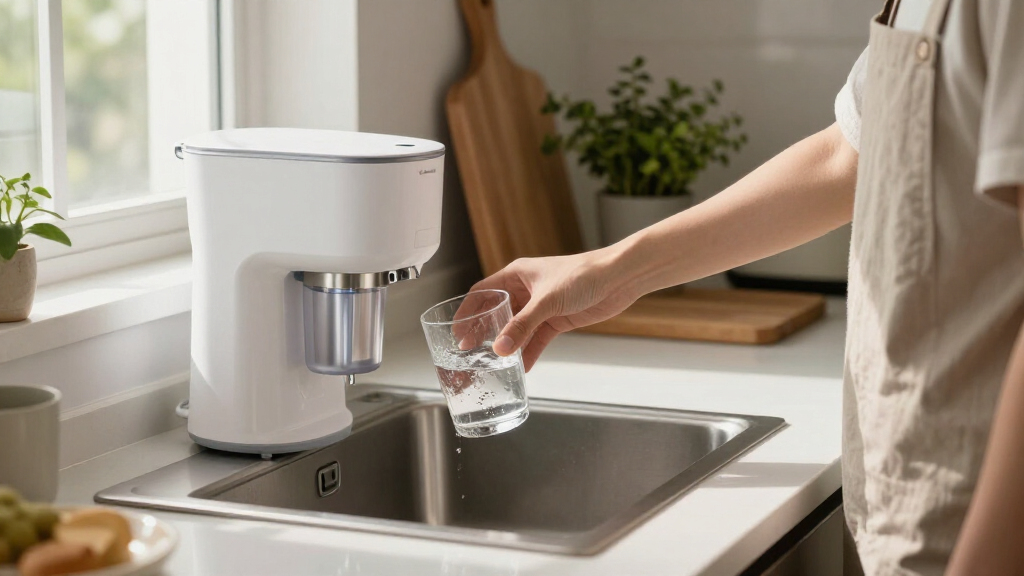
A compact countertop water filter lets you get reverse-osmosis-quality water without installing anything under your sink, and the field in 2026 is crowded. The PR1-A Countertop UV RO System takes my best overall spot for pairing UV sterilization with multi-stage filtration in a footprint that fits most kitchens. If budget leads your decision, the SimPure Y7T-A delivers genuine 5-stage mineral RO at one of the lowest prices here, while the Waterdrop CT01 stands out as the only option with built-in hot and cold dispensing. The main tradeoffs in this category are tank capacity versus counter space, filtration speed, and whether you want mineral addition back into the water. Keep reading for the full breakdown of all ten systems.
Open a free Amazon Business account
Business pricing, bulk buying and tax-exempt orders.
Create a free accountAs an affiliate, we earn on qualifying purchases.
Complete the kit


Key Takeaways
- True reverse osmosis systems dominated this comparison — seven of ten picks are RO — but the GLACIER FRESH PC04 proves a gravity-fed filter still makes sense if you want zero electricity use and the lowest running cost.
- Pitcher-based designs (Waterdrop C2S, DREO 7-in-1) trade a small counter footprint for slower dispensing, while tank-style units like the DREO RO 112 3L deliver instant water on demand.
- UV sterilization (PR1-A, SimPure Y7P-BW) is the clearest premium differentiator, adding protection against bacteria and viruses that standard RO membranes alone don’t address.
- Mineral addition has become a standard feature rather than a premium one — the SimPure Y7T-A includes it at a budget price, so there’s little reason to pay extra for it alone.
- Hot-and-cold models like the Waterdrop CT01 command a real price premium and larger footprints; they only make sense if you’ll actually use instant hot water for tea or formula.
| SimPure Y7T-A Countertop Reverse Osmosis Water Filter, 5 Stage Mineral RO |  | Best Overall | Filtration Stages: 5-stage mineral RO | Filter Capacity: 528 gallons | Water Utilization Ratio: 4:1 pure to drain | VIEW LATEST PRICE | See Our Full Breakdown |
| Waterdrop C2S Countertop RO Filtration System with 40oz Glass Pitcher | 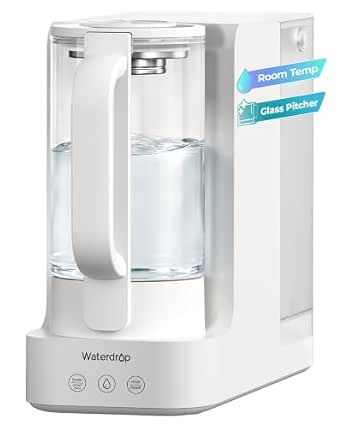 | Best Value Pick | Filtration Technology: 6-stage reverse osmosis | Membrane: 0.0001μm RO membrane | Filter Capacity: Up to 528 gallons | VIEW LATEST PRICE | See Our Full Breakdown |
| DREO Reverse Osmosis Water Filter System Countertop, RO Water Filter 112 3L | 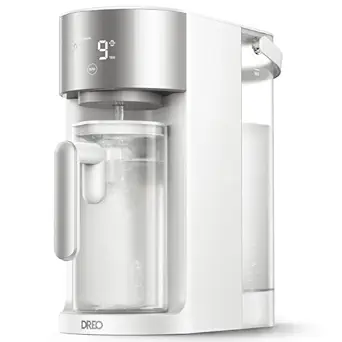 | Best for Small Countertops | Filter Type: 7-in-1 reverse osmosis | Capacity: 3L tank + 1.1L pitcher | Filter Life: 265 gallons (1000L) | VIEW LATEST PRICE | See Our Full Breakdown |
| PR1-A Countertop UV Reverse Osmosis Water Filter System |  | Best for Microbiological Safety | Filtration Stages: 6-stage with UV light | Filtration Media: Polypropylene, activated carbon, RO membrane, post carbon, UV | Water Production: Up to 2L per cycle | VIEW LATEST PRICE | See Our Full Breakdown |
| DREO Reverse Osmosis Water Filter Countertop, 7-in-1 RO Filtration System with Autofill Pitchers |  | Best for Busy Households | Filtration System: 7-in-1 reverse osmosis | Purification Efficiency: Removes 99.9% of contaminants | Standards Tested: NSF/ANSI 58 | VIEW LATEST PRICE | See Our Full Breakdown |
| GLACIER FRESH PC04 Gravity-Fed Countertop Water Filtration System |  | Best Off-Grid Pick | Capacity: 2.25 gallons | Filter lifespan: Up to 200 gallons or 3 months | Material: Stainless steel | VIEW LATEST PRICE | See Our Full Breakdown |
| Waterdrop C2SL Countertop Reverse Osmosis Water Filter with Mineral Addition |  | Best Filtration Performance | Filtration stages: 7-stage RO with mineral addition | Tank capacity: 108 oz | Glass pitcher capacity: 40 oz | VIEW LATEST PRICE | See Our Full Breakdown |
| Waterdrop CT01 Countertop Water Filter System, Hot and Cold Water Dispenser |  | Best for Hot Water On Demand | Capacity: 1.32 gallons | Filtration stages: 6-stage | Temperature range: 113°F–203°F | VIEW LATEST PRICE | See Our Full Breakdown |
| Philips Countertop Reverse Osmosis Water Filter, Installation-Free |  | Best Compact Footprint | Filtration technology: 5-stage RO with Aquaporin Inside | Certifications: NSF/ANSI/CAN 372, NSF/ANSI 58, SGS | Dimensions: 5 x 13 x 14 inches | VIEW LATEST PRICE | See Our Full Breakdown |
| SimPure Y7P-BW UV Countertop Reverse Osmosis Water Filter, 5 Stage RO |  | Best High-Capacity Value | Purification method: 0.0001μm reverse osmosis with UV | Filtration stages: 5-stage RO + UV | Capacity: 528 gallons | VIEW LATEST PRICE | See Our Full Breakdown |
| compact countertop water filter | Filtration Stages |
|---|---|
| SimPure Y7T-A Countertop Rever | 5-stage mineral RO |
| Waterdrop C2S Countertop RO Fi | — |
| DREO Reverse Osmosis Water Fil | — |
| PR1-A Countertop UV Reverse Os | 6-stage with UV light |
| DREO Reverse Osmosis Water Fil | — |
| GLACIER FRESH PC04 Gravity-Fed | — |
| Waterdrop C2SL Countertop Reve | 7-stage RO with mineral addition |
| Waterdrop CT01 Countertop Wate | 6-stage |
| Philips Countertop Reverse Osm | — |
| SimPure Y7P-BW UV Countertop R | 5-stage RO + UV |
More Details on Our Top Picks
SimPure Y7T-A Countertop Reverse Osmosis Water Filter, 5 Stage Mineral RO
This model earns the top spot because it solves the two most common complaints about countertop RO: bland, stripped water and wasteful operation. The 5-stage mineral RO adds calcium, magnesium, and potassium back after filtration, so the water tastes closer to premium bottled water than the flat output of the DREO 112. Its 4:1 pure-to-drain ratio is the best in this lineup, which matters if you’re on a water meter or simply hate watching three liters go down the drain for every one produced — a real weakness of the PR1-A. The SGS testing against NSF/ANSI 58 also gives it stronger third-party credibility than the second DREO system. The tradeoff is straightforward: no hot or cold dispensing, and the 16-to-21-inch height when open means it needs vertical clearance under cabinets.
Pros:- Remineralizes water with calcium, magnesium, and potassium for better taste
- Best-in-lineup 4:1 pure-to-drain water efficiency
- Reduces over 99.99% of contaminants including heavy metals and PFAS
- SGS tested against NSF/ANSI 58 with no installation required
Cons:- Room-temperature water only, no hot or cold options
- Requires a power outlet, so it’s less portable than gravity-fed alternatives
- Height increases when open, needing clearance under cabinets
Best for: Buyers who want RO-quality purification with great-tasting remineralized water and low water waste
Not ideal for: Anyone wanting instant hot or cold water — this dispenses room temperature only, unlike the Waterdrop CT01
- Filtration Stages:5-stage mineral RO
- Filter Capacity:528 gallons
- Water Utilization Ratio:4:1 pure to drain
- Pitcher Material:Borosilicate glass
- Height:16.1 in closed / 21.3 in open
- Certification:SGS tested against NSF/ANSI 58
- Installation:None, plug and play
Our verdict“Buy this if you want the best balance of taste, contaminant removal, and water efficiency in a plug-in countertop unit.”
Waterdrop C2S Countertop RO Filtration System with 40oz Glass Pitcher
Where the SimPure Y7T-A justifies a higher price with mineral addition and superior water efficiency, the Waterdrop C2S delivers the essentials — a 0.0001μm RO membrane, lead and VOC reduction, and smart maintenance alerts — at a friendlier price point. The detachable 40oz glass pitcher is the standout convenience here: unlike the DREO 112’s fixed 3L tank, you can carry filtered water to the table or an RV galley. Its NSF/ANSI 372 lead-free certification and IAPMO R&T listing also give it firmer documentation than most budget rivals. The honest tradeoff is transparency — Waterdrop doesn’t publish a clear filter replacement schedule, so budgeting for long-term costs involves some guesswork, and performance dips with very poor source water.
Pros:- 0.0001μm RO membrane reduces lead, heavy metals, VOCs, and chlorine
- NSF/ANSI 372 and IAPMO R&T certifications
- Detachable 40oz glass pitcher for portable serving and storage
- Smart alerts take the guesswork out of maintenance
Cons:- No published filter replacement frequency, making running costs unclear
- Performance varies noticeably with source water quality
Best for: Budget-conscious buyers and RV owners who want certified RO filtration without installation costs
Not ideal for: Households with heavily contaminated source water — output and filter life will suffer without clear replacement guidance
- Filtration Technology:6-stage reverse osmosis
- Membrane:0.0001μm RO membrane
- Filter Capacity:Up to 528 gallons
- Tank Capacity:40oz glass pitcher
- Certification:NSF/ANSI 372, IAPMO R&T
- Installation:Installation-free, plug and play
Our verdict“The smart choice if you want certified RO performance and a portable pitcher without paying for premium extras.”
DREO Reverse Osmosis Water Filter System Countertop, RO Water Filter 112 3L
Not every kitchen has room for a 14-inch-wide filtration tower, and the DREO 112 addresses that directly with a 6.73-inch footprint — noticeably slimmer than the PR1-A’s 7-inch width but paired with a much shallower profile. Despite the compact body, it packs features usually reserved for larger units: real-time TDS monitoring so you can actually see filtration performance, auto-fill, and self-cleaning. Compared with the Waterdrop C2S, the fixed 3L tank plus 1.1L pitcher gives it more on-demand capacity, but the 265-gallon filter life is the catch — you’ll be replacing filters roughly twice as often as the 528-gallon systems from SimPure and Waterdrop, which adds up over time.
Pros:- Slim 6.73-inch width fits narrow counters and small kitchens
- Real-time TDS monitoring shows filtration performance at a glance
- Self-cleaning and auto-fill reduce hands-on maintenance
- Eco-friendly 3:1 pure-to-drain ratio
Cons:- Short 265-gallon filter life means more frequent replacements than 528-gallon rivals
- Higher upfront cost than basic countertop filters
Best for: Apartment dwellers or anyone with tight counter space who wants full RO features in a slim body
Not ideal for: Larger households — the 265-gallon filter life and moderate tank size mean frequent refills and replacements
- Filter Type:7-in-1 reverse osmosis
- Capacity:3L tank + 1.1L pitcher
- Filter Life:265 gallons (1000L)
- Water Waste Ratio:3:1 pure to drain
- Dimensions:14.51″ L × 6.73″ W × 13.35″ H
- Special Features:Real-time TDS monitoring, auto-fill, self-cleaning
Our verdict“The pick for small spaces that still want TDS monitoring and self-cleaning — just budget for more frequent filter swaps.”
PR1-A Countertop UV Reverse Osmosis Water Filter System
The PR1-A’s UV sterilization stage is what separates it from every other unit in this batch. RO membranes handle dissolved contaminants well, but a UV lamp adds a layer of defense against bacteria and viruses — a meaningful difference for anyone drawing from well water, stored tanks, or questionable travel sources. Its borosilicate glass pitcher is also heat-resistant, unlike standard glass, giving it an edge over the Waterdrop C2S’s pitcher for hot kitchens or RVs. The compromises are real, though: the 3:1 waste ratio falls short of the SimPure Y7T-A’s 4:1, some users report audible dripping during cycles, and at 14.6 inches wide it’s the chunkiest footprint here — nearly double the depth-conscious profile of the DREO 112.
Pros:- 6-stage filtration with UV light for microbiological protection
- Removes over 99.99% of contaminants including arsenic, lead, and fluoride
- Heat-resistant BPA-free borosilicate glass pitcher
- No installation and low monthly operating costs
Cons:- Noticeable dripping sound during filtration cycles
- 3:1 waste water ratio lags the SimPure’s 4:1 efficiency
- Largest countertop footprint in this comparison
Best for: Well-water users, campers, and travelers who need UV protection against microbes alongside RO filtration
Not ideal for: Quiet-sensitive kitchens or small counters — it drips audibly during operation and has the largest footprint in this lineup
- Filtration Stages:6-stage with UV light
- Filtration Media:Polypropylene, activated carbon, RO membrane, post carbon, UV
- Water Production:Up to 2L per cycle
- Filter Life:CF filter: 6 months, RO filter: 12 months
- Waste Water Ratio:3:1
- Dimensions:14.6 x 7 x 14.2 inches
- Material:BPA-free high borosilicate glass pitcher
Our verdict“Choose this if microbial safety from well water or travel sources matters more to you than silence and slim sizing.”
DREO Reverse Osmosis Water Filter Countertop, 7-in-1 RO Filtration System with Autofill Pitchers
Most countertop RO systems make you wait and dispense manually; the DREO 7-in-1 ships with two autofill pitchers, so one can sit in the fridge chilling while the unit refills the other — a workflow that suits multi-person households far better than the single 40oz pitcher bundled with the Waterdrop C2S. Its 7-stage filtration tackles chlorine, fluoride, PFOA, and PFOS, and the self-cleaning cycle cuts down on the manual flushing that simpler systems demand. It shares the 99.9% removal claim with its sibling, the DREO 112, but trades that model’s compact footprint and TDS display for higher serving capacity. Frustratingly, DREO doesn’t publish a flow rate, so if speed of dispensing is your priority, you’re buying somewhat blind.
Pros:- Two autofill pitchers keep a continuous supply ready, including in the fridge
- 7-in-1 filtration removes 99.9% of contaminants including PFOA and PFOS
- Self-cleaning feature reduces routine maintenance
- Tested to NSF/ANSI 58 standards
Cons:- No published flow rate, making speed comparisons difficult
- Two-pitcher setup occupies considerable countertop and fridge space
Best for: Families and shared offices where multiple people need chilled, ready-to-pitch filtered water throughout the day
Not ideal for: Singles or couples in small kitchens — two pitchers plus a full-size unit is overkill and eats counter space
- Filtration System:7-in-1 reverse osmosis
- Purification Efficiency:Removes 99.9% of contaminants
- Standards Tested:NSF/ANSI 58
- Number of Pitchers:2 autofill pitchers
- Self-Cleaning:Yes
- Installation:Install-free
Our verdict“Pick this for a busy household that needs volume and convenience over the slimmest footprint or fastest known flow rate.”
GLACIER FRESH PC04 Gravity-Fed Countertop Water Filtration System
Most filters in this roundup need an outlet, which makes the GLACIER FRESH PC04 the outlier: it’s gravity-fed and non-electric, so it keeps working during power outages, camping trips, or emergencies. The 2.25-gallon stainless steel body serves up to four people, and the electrosorption media tackles heavy metals without the wastewater that reverse osmosis models like the SimPure Y7P-BW produce. The tradeoff is purity — gravity filtration can’t match the 0.0001-micron RO membranes in the SimPure or Philips units, so anyone with serious contamination concerns should look elsewhere. Filter life of just 200 gallons or 3 months also runs short compared to the 528-gallon ratings on electric rivals, meaning higher long-term replacement costs despite the lower upfront price.
Pros:- Works without electricity, ideal for emergencies and off-grid use
- 2.25-gallon capacity serves up to 4 people
- Zero wastewater compared to reverse osmosis systems
- Durable stainless steel construction
Cons:- Gravity filtration removes fewer contaminants than RO competitors
- Short filter life of 200 gallons or 3 months raises running costs
Best for: Campers, cabin owners, and emergency-preparedness buyers who need clean water without electricity or plumbing
Not ideal for: Households with heavily contaminated source water — gravity filtration removes fewer contaminants than certified RO systems
- Capacity:2.25 gallons
- Filter lifespan:Up to 200 gallons or 3 months
- Material:Stainless steel
- Installation:Countertop, no plumbing required
- Power source:Non-electric, gravity-fed
- Suitable for:Up to 4 people
Our verdict“Buy this if you value independence from power and plumbing over maximum contaminant removal.”
Waterdrop C2SL Countertop Reverse Osmosis Water Filter with Mineral Addition
For sheer contaminant removal, nothing in this batch matches the Waterdrop C2SL: 99.8% PFOA, 99.96% microplastics, and 99.83% lead reduction across a 7-stage process, backed by NSF/ANSI/CAN 372 certification. Unlike the Philips RO unit, which relies on a basic 5-stage setup, the C2SL adds a remineralization stage that puts calcium and magnesium back into the water — addressing the flat taste that turns many people off reverse osmosis. The smart display and voice alerts also outclass the SimPure Y7P-BW’s simpler interface. Its weaknesses are structural: the 108-ounce tank suits only 1–2 people, and the 3:1 pure-to-drain ratio, while respectable, wastes more water than SimPure’s 4:1 efficiency. Refill frequency becomes a daily chore for anyone cooking with filtered water regularly.
Pros:- Class-leading contaminant reduction for PFAS, microplastics, and lead
- Mineral addition stage improves taste over standard RO
- Smart display and voice alerts simplify maintenance
- Long 12-month / 528-gallon filter life
Cons:- Small 108 oz tank limits it to 1-2 person households
- 3:1 pure-to-drain ratio wastes more water than the SimPure Y7P-BW
Best for: Health-focused couples and singles concerned about PFAS, microplastics, and lead in their tap water
Not ideal for: Families of three or more — the small tank means constant refilling during cooking or meal prep
- Filtration stages:7-stage RO with mineral addition
- Tank capacity:108 oz
- Glass pitcher capacity:40 oz
- Filter life:Up to 12 months or 528 gallons
- Water waste ratio:3:1 pure-to-drain
- Certifications:NSF/ANSI/CAN 372, lead-free materials
- Contaminant reduction:99.8% PFOA, 99.96% microplastics, 99.83% lead
Our verdict“The strongest purifier here for small households who want certified, great-tasting RO water.”
Waterdrop CT01 Countertop Water Filter System, Hot and Cold Water Dispenser
The Waterdrop CT01 is the only model in this lineup that does what a kettle and a filter do together: customizable hot water up to 203°F plus chilled water, with adjustable temperature and volume settings for tea, formula, or coffee. Every RO option here — the C2SL, the Philips, the SimPure Y7P-BW — dispenses room-temperature water only, so anyone tired of boiling water separately will find this the practical choice. Its 6-stage filtration also produces zero wastewater while retaining beneficial minerals, a gentler approach than RO. The catch is transparency: Waterdrop publishes far less detail on specific contaminant reduction than the C2SL’s certified percentages, and filter replacement costs aren’t clearly disclosed. If your priority is verified purity over convenience, the C2SL is the safer bet.
Pros:- Instant hot (up to 203°F) and cold water with customizable settings
- Zero wastewater and retains beneficial minerals
- Plug-in setup with no plumbing or installation
- 1.32-gallon capacity suits family and office use
Cons:- Limited published data on specific contaminant reduction
- Undisclosed long-term filter replacement costs
- Not reverse osmosis, so it removes fewer contaminants than RO rivals
Best for: Tea drinkers, parents preparing formula, and office users who want instant hot and cold filtered water
Not ideal for: Buyers who want published, certified contaminant reduction data before committing
- Capacity:1.32 gallons
- Filtration stages:6-stage
- Temperature range:113°F–203°F
- Filter life:Up to 6 months
- Tank design:3.7-inch slim side tank
- Wastewater:Zero
Our verdict“The pick for anyone who wants a kettle, cooler, and filter in one countertop unit.”
Philips Countertop Reverse Osmosis Water Filter, Installation-Free
At 5 inches wide, the Philips is the slimmest RO system in this roundup — narrower than the SimPure Y7P-BW’s 7.5 inches and dramatically smaller than any full-tank dispenser. That footprint matters in small apartments or offices where counter space is the scarcest resource. The Aquaporin Inside 5-stage membrane carries NSF/ANSI 58 certification, and the included 16.9 oz glass bottle is a thoughtful touch for desk or bedside use. The compromise is patience: a 266 ml-per-minute flow rate means filling a large bottle takes noticeably longer than with the C2SL or Y7P-BW, and there’s no internal tank, so every cup is dispensed on demand. Compared with the Waterdrop C2SL, you trade filtration stages and capacity for that tidy silhouette.
Pros:- Slimmest footprint in the roundup at 5 inches wide
- NSF/ANSI 58 certified Aquaporin RO membrane
- Includes a portable 16.9 oz glass bottle
- 12-month filter lifespan
Cons:- Slow 9 oz per minute flow rate tests patience
- No internal tank, so water is dispensed only on demand
- Limited capacity for high-volume needs
Best for: Apartment dwellers and office workers with minimal counter space who still want certified RO purification
Not ideal for: High-volume users and families — the slow flow rate and on-demand dispensing make batch filling tedious
- Filtration technology:5-stage RO with Aquaporin Inside
- Certifications:NSF/ANSI/CAN 372, NSF/ANSI 58, SGS
- Dimensions:5 x 13 x 14 inches
- Flow rate:9 oz (266 ml) per minute
- Filter lifespan:Up to 12 months
- Included accessories:Water dispenser, 16.9 oz glass bottle, user manual
Our verdict“The space-saver’s choice when counter real estate matters more than speed.”
SimPure Y7P-BW UV Countertop Reverse Osmosis Water Filter, 5 Stage RO
The SimPure Y7P-BW balances purification power with running costs better than anything else here. Its 4:1 pure-to-drain ratio beats the Waterdrop C2SL’s 3:1, meaning a third less water wasted per gallon produced — a real difference on municipal water bills. The UV sterilization stage adds a layer of protection none of the other four units offer, and 99.99% removal across heavy metals, chlorine, and PFAS covers the contaminants most buyers worry about. Compared with the Philips, you give up the slim profile — at 17.3 inches wide and 13 pounds, this dominates a small counter — but gain a proper dispensing system with a 0.29 gpm flow rate. The 6-month filter life is half the C2SL’s, and there’s no hot or cold option like the CT01 provides.
Pros:- 4:1 pure-to-drain ratio is the most water-efficient in this batch
- UV sterilization stage adds protection no rival here offers
- 528-gallon capacity supports long-term household use
- Faster 0.29 gpm flow than the Philips unit
Cons:- Large 17.3-inch footprint dominates small countertops
- Room-temperature dispensing only
- 6-month filter life doubles replacement frequency versus 12-month rivals
Best for: Budget-conscious households wanting efficient, high-volume RO with UV protection and low water waste
Not ideal for: Tea and coffee drinkers who need hot water — this dispenses room temperature only
- Purification method:0.0001μm reverse osmosis with UV
- Filtration stages:5-stage RO + UV
- Capacity:528 gallons
- Filter life cycle:6 months
- Water efficiency:4:1 pure to drain
- Maximum flow rate:0.29 gpm
- Dimensions:17.3″L x 7.5″W x 17″H
- Supported TDS level:Up to 500 ppm
Our verdict“The best value for efficiency-minded buyers who want maximum purification per gallon of wastewater.”
How We Picked
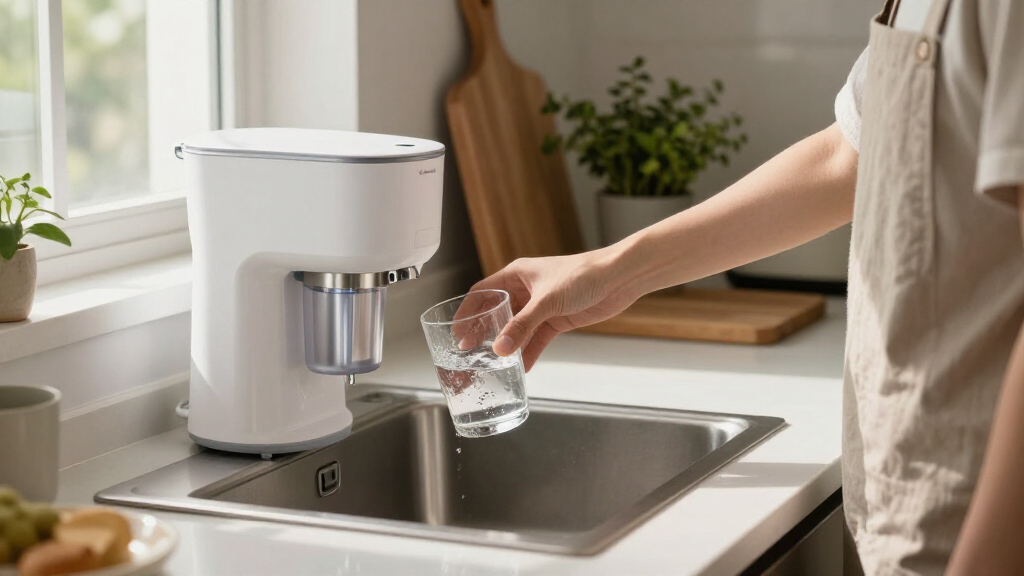
My ranking starts with filtration performance: whether the system uses genuine reverse osmosis, how many stages it includes, and whether it adds minerals back or offers UV sterilization for microbial safety. From there I weighed footprint and capacity against each other — the entire point of a compact countertop filter is saving space, so a bulky tank that holds more water only wins if the size stays reasonable. Dispensing speed and daily usability mattered too, because a slow system gets skipped, and families end up back on bottled water.
Finally, I factored in filter replacement costs, warranty coverage, and overall value. Two systems with identical specs can differ enormously once you price three years of cartridges. Products are ordered so the top picks balance all four criteria, while lower-ranked entries still earn their place for specific situations — budget buyers, off-grid users, or hot-water seekers — where they beat the leaders on one dimension.
Factors to Consider When Choosing Compact Countertop Water Filter
Before settling on a specific model, it helps to understand the forces that actually shape satisfaction with a countertop filter. These are the factors that separate a system you’ll use daily from one that ends up unplugged in a cabinet.RO vs. Gravity Filtration: Know What You’re Buying
Reverse osmosis forces water through a semipermeable membrane that removes dissolved solids, heavy metals, and most contaminants — but it needs electricity, produces some wastewater, and costs more to maintain. Gravity-fed systems like the GLACIER FRESH PC04 work without power and have cheap filters, but they can’t match RO for contaminant reduction. A common mistake is buying gravity filtration expecting RO-level purity, or paying for RO when your municipal water only needs chlorine and sediment removed. Check your local water quality report before choosing — if you have high TDS, lead service lines, or well water, RO is worth the premium. If your water is already decent, a simpler system saves money forever.
Realistic Counter Space and Tank Size
Manufacturer footprints often exclude the space needed for a dispensed glass, a removable pitcher, or the clearance to open a lid. Measure your counter before buying, including depth — many of these units are deeper than a standard toaster. Bigger tanks mean fewer refills but a heavier, bulkier machine that dominates a small kitchen. Pitcher-based systems offer a middle path: the machine itself stays slim, and the filled pitcher moves to the fridge. Renters and anyone with limited outlets should also confirm plug placement, since most RO units here need dedicated power near the sink for refilling.
The Hidden Cost of Filter Replacements
The sticker price is only the entry fee. RO systems typically need a new membrane every 12–24 months plus pre- and post-filters two to four times a year, which can run $80–$200 annually depending on the brand. Proprietary filter designs lock you into one supplier, so check cartridge availability and pricing before committing. Some budget systems are cheap upfront precisely because replacement cartridges carry high margins. A smart approach is to calculate three-year total cost of ownership — machine plus filters — and compare that figure across models rather than the purchase price alone. It frequently reorders the value ranking.
Wastewater Ratio and Refill Habits
Every RO system rejects some water while filtering, and older designs can send three or four gallons down the drain per gallon of purified water. Newer countertop models advertise ratios as efficient as 1:1 or 2:1, which matters both for your water bill and for how often you refill the tank. Because countertop units hold their feed water internally rather than drawing from the plumbing, a poor ratio means you’re hauling water from the sink more often — a daily annoyance that specs sheets don’t fully convey. If you hate refilling, prioritize larger tanks and efficient membranes over dispensing gimmicks.
Hot Water Features: Genuine Convenience or Gimmick
Instant-hot capability, like the Waterdrop CT01 offers, is legitimately useful for tea, coffee, oatmeal, and baby formula — but it adds cost, bulk, and another component that can fail. Be honest about whether you’ll use it daily. If you already own an electric kettle, the hot-water feature mostly duplicates what you have. Also check whether the hot water comes from a dedicated purified line or passes through a heating tank that needs its own cleaning cycle. Households with infants often find this feature justifies the premium immediately; everyone else should pocket the difference and buy a higher-capacity cold-only system.
Mineral Addition and Taste
RO water is so thoroughly filtered that it tastes flat to some people, which is why several models here add calcium and magnesium back after filtration. This isn’t a health necessity — you get these minerals mostly from food — but it noticeably improves taste and makes coffee and tea brew better. The good news from my comparison is that mineral addition has become cheap and common, so don’t let it drive your decision on its own. What matters more is filter quality and maintenance access: look for systems whose cartridges swap out with a quarter-turn rather than requiring panel removal. The best-tasting water comes from a well-maintained system, not from any single feature on the box.
Frequently Asked Questions
Are countertop RO systems as good as under-sink reverse osmosis systems?
For filtration quality, yes — a countertop RO system with a genuine membrane removes the same classes of contaminants as an under-sink unit. The differences are practical: countertop models have smaller tanks, slower output, and need manual refilling, while under-sink systems filter continuously from your plumbing at higher volume. Countertop units win on portability, zero installation, and apartment-friendliness, since renters can take them when they move. If your household drinks more than a few gallons a day or you want to feed an ice maker, under-sink is still the better fit. For typical drinking-water needs of one to four people, a countertop system covers it comfortably.
How often do I need to replace filters, and what will it cost?
Most countertop RO systems here use multi-stage cartridges where the pre- and post-filters need replacement every 6 to 12 months, and the RO membrane lasts 12 to 24 months depending on your source water quality and daily usage. Annual maintenance typically runs $80 to $200, with UV-equipped models adding a UV lamp replacement every 12 months or so. Heavily sedimented well water will shorten filter life, while soft municipal water extends it. My advice is to check replacement cartridge prices before buying — the cheapest machines sometimes carry the priciest filters. Set calendar reminders for changes, because an overdue filter reduces both flow rate and contaminant removal.
Do I really need UV sterilization in a countertop filter?
For most municipal water users, UV is a nice extra rather than a necessity — chlorine treatment already handles bacteria at the source, and the RO membrane itself blocks microbial contaminants physically. UV becomes genuinely valuable if you’re on well water, stored water, or any supply with known biological contamination risk, since it neutralizes organisms that could regrow in a tank sitting on your counter. It’s also worth having if you plan to let water sit in the tank for days between uses. Expect to pay more upfront and replace the UV lamp periodically. If your water source is clean and you refill daily, save the money and put it toward better filters.
Is a gravity-fed filter like the GLACIER FRESH PC04 enough, or do I need RO?
It depends entirely on what’s in your water. Gravity-fed filters with carbon and ceramic elements handle chlorine, taste, odor, sediment, and some heavy metals effectively, and they do it with zero electricity, cheap replacement filters, and off-grid capability. They cannot remove dissolved solids, arsenic, nitrates, fluoride, or salts the way a reverse osmosis membrane can. Get a water test or read your annual consumer confidence report first — if TDS is low and your concern is taste and chlorine, gravity filtration is honest value. If you’re dealing with high dissolved solids or specific contaminant concerns, only RO will do the job. Buying more filtration than your water requires is one of the most common and avoidable mistakes in this category.
What should I check before buying if I have a small kitchen or rental apartment?
Measure three things: the counter footprint including depth, the height clearance if you plan to keep the unit under cabinets, and the distance to a power outlet, since nearly every RO model here needs electricity. Check whether your faucet can accommodate manual filling — most countertop systems are filled by lifting the tank or sliding a pitcher under the tap, so counter-to-sink distance matters more than it seems. Renters should favor installation-free designs with no plumbing modifications, which all ten of these qualify as. Confirm the empty weight too, since you’ll be moving the unit to refill or clean it. Finally, look at the wastewater tank design: models that separate waste internally mean fewer trips to the sink.
Conclusion
After comparing all ten systems, the right choice depends less on specs and more on how you actually drink water. For most households, the PR1-A Countertop UV RO System is the best overall pick — it combines thorough multi-stage filtration with UV safety and a sensible footprint. Best value goes to the SimPure Y7T-A, which delivers 5-stage mineral RO at a price that undercuts nearly everything here without cutting filtration quality.
If you want the premium experience, the Waterdrop CT01 earns it with genuine hot-and-cold dispensing that replaces a kettle entirely, while the DREO 7-in-1 with autofill pitchers suits buyers who prioritize convenience and set-and-forget operation. For beginners and budget-limited buyers, the GLACIER FRESH PC04 is the easiest entry point — no electricity, no complex filters, just simple gravity purification. And for specific needs: well-water users and anyone worried about microbial contamination should choose a UV model like the SimPure Y7P-BW, while high-volume drinkers will appreciate the instant dispensing of the tank-style DREO RO 112 3L. Match the pick to your water source and daily habits, and you’ll end up with a system you actually use.
NFL season / tailgating Picks
team gear
As an affiliate, we earn on qualifying purchases.