
Whole house water filtration systems treat every drop of water entering your home, but choosing the right one comes down to matching the system to your specific water problems and budget. For most homeowners, the iSpring WGB32B Commercial-Grade Whole House Water Filter System earns the top spot for its durable housing, strong flow rate, and versatile three-stage filtration that handles sediment, chlorine, and common contaminants without major pressure loss. Budget-conscious buyers should look at the GE GXWH20T, an affordable entry point that’s easy to install, while well-water owners dealing with iron and manganese will find the iSpring WCFM400K with Digital Control purpose-built for that job. The main tradeoffs in this category are upfront cost versus long-term filter expenses, filtration power versus water pressure, and simple cartridge systems versus more complex media-based setups. Read on for the full breakdown of all 15 systems and which one fits your situation.

Get home appliances delivered free with Prime
- Fast, free delivery on millions of items
- Prime Video, Amazon Music and more included
- Member-only deals all year
Complete the kit


Key Takeaways
- Well water and city water demand different systems: the iSpring WCFM400K and WGB32BM target iron and manganese, which city-water homes don’t need to pay for.
- Three-stage systems from iSpring and Express Water dominated the middle of the rankings because they balance contaminant coverage against flow rate better than single- or two-stage units like the iSpring WGB21B.
- Filter replacement costs varied more than purchase prices — the GE GXWH20T is cheap upfront but requires quarterly cartridge swaps, while the LiquaGen‘s catalytic carbon media lasts years before needing replacement.
- UV-equipped systems like the WF3-03 only justify their price for homes with bacterial concerns, such as untreated well water or intermittent boil advisories.
- Anti-scale models like the Express Water 3-Stage Anti-Scale address hard-water symptoms but don’t soften water the way a true softener does — a common point of confusion among buyers.
| iSpring WCFM400K Whole House Iron and Manganese Water Filter System with Digital Control |  | Best for Well Water | Type: Whole house water filter system | Media Regeneration: Air-only, no chemicals | Control: Digital control valve | VIEW LATEST PRICE | See Our Full Breakdown |
| LiquaGen Whole House Water Filtration System – Catalytic Carbon & KDF 55 Media, 10″ x 54″ |  | Best Overall | Media Type: Catalytic Carbon & KDF 55 | Tank Size: 10″ x 54″ | Flow Rate: 12 GPM | VIEW LATEST PRICE | See Our Full Breakdown |
| WF3-03 3-Stage Free-Standing Whole House Water Filtration System with UV Filter | 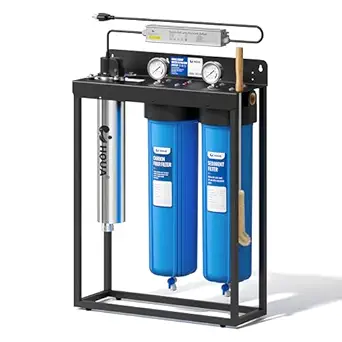 | Best for Microbiological Safety | Flow Rate: 3–15 GPM | Operating Pressure: 25–116 PSI | UV Filter Power: 55W | VIEW LATEST PRICE | See Our Full Breakdown |
| Kinetico K5 Water Filter |  | Best for Drinking Water Quality | Filtration Method: Reverse Osmosis | Installation Type: Under sink | Power Source: Corded electric | VIEW LATEST PRICE | See Our Full Breakdown |
| iSpring WGB32BM Whole House Water Filter System for Iron and Manganese Removal |  | Best Value | Filter Capacity: 100,000 gallons | Flow Rate: Up to 15 GPM | Inlet/Outlet: 1 inch NPT | VIEW LATEST PRICE | See Our Full Breakdown |
| iSpring WGB31BCM Whole House Water Filter System with Clear Filter Housing |  | Best for Small Homes and Rentals | Filtration Stages: 3 | Flow Rate: 15 GPM | Dimensions: 24.5″ x 18″ x 8″ | VIEW LATEST PRICE | See Our Full Breakdown |
| GE Whole House Water Filtration System GXWH20T |  | Best Budget Starter System | Model Number: GXWH20T | Brand: GE | Stages: 1 (single housing) | VIEW LATEST PRICE | See Our Full Breakdown |
| iSpring WGB32B Commercial-Grade Whole House Water Filter System |  | Best Overall for Most Homes | Filtration Capacity: 100,000 gallons | Flow Rate: Up to 15 GPM | Inlet/Outlet: 1″ NPT | VIEW LATEST PRICE | See Our Full Breakdown |
| Waterdrop WHF2E-PC Whole House Water Filter System, 4-Stage Filtration |  | Best for Municipal Water Chemical Concerns | Filtration Stages: 4 | Capacity: 50,000 gallons | Filter Life: 6 months | VIEW LATEST PRICE | See Our Full Breakdown |
| Express Water Whole House Water Filter System, Anti-Scale, 3-Stage |  | Best for Scale and Appliance Protection | Type: Whole house water filter system | Stages: 3 (anti-scale) | Connection Size: 1 inch | VIEW LATEST PRICE | See Our Full Breakdown |
| Express Water Whole House Water Filter System, 3-Stage |  | Easiest Maintenance | Filter Type: 3-Stage | Connection Size: 1 inch | Capacity: Up to 100,000 gallons | VIEW LATEST PRICE | See Our Full Breakdown |
| WF3-01 3-Stage Whole House Water Filtration System | 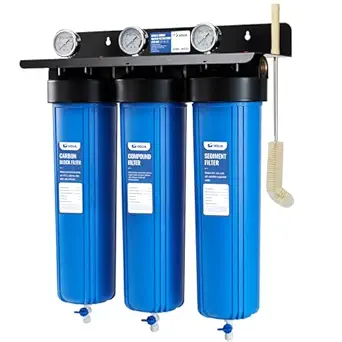 | Best for Heavy Metal Removal | Filter Type: Sediment, Carbon Block, GAC+KDF | Number of Filters: 3 | Filter Dimensions: 20″ x 5.5″ | VIEW LATEST PRICE | See Our Full Breakdown |
| Express Water Whole House Water Filter System, 3-Stage Ultimate Protection |  | Best Premium Build | Filter Life Cycle: 6 months | Capacity: 100,000 gallons | Maximum Flow Rate: 17 gpm | VIEW LATEST PRICE | See Our Full Breakdown |
| Aquaboon 3-Stage Whole House Water Filter System |  | Best Value 3-Stage | Filter Stages: 3 | Micron Rating: 5 Micron | Filter Size: 20″ x 4.5″ | VIEW LATEST PRICE | See Our Full Breakdown |
| iSpring WGB21B 2-Stage Whole House Water Filtration System |  | Best for Small Households | Filter Capacity: 50,000 gallons | Flow Rate: 15 gpm | Inlet/Outlet Size: 1 inch | VIEW LATEST PRICE | See Our Full Breakdown |
More Details on Our Top Picks
iSpring WCFM400K Whole House Iron and Manganese Water Filter System with Digital Control
Well water presents a different problem than municipal supply — iron and manganese staining — and this option targets exactly that. What sets the WCFM400K apart from cartridge-based rivals like the iSpring WGB32BM is its air-only automatic regeneration, which means no chemical refills and no quarterly cartridge swaps. The digital control valve lets you set flush intervals once and forget about it. Compared with the LiquaGen carbon system, which handles chlorine and PFAS from city water, this unit solves the rust-orange stains and metallic taste that plague private wells. The tradeoff is specificity: it won’t touch hydrogen sulfide (that rotten-egg smell) or dissolved solids, so buyers with sulfur problems will need additional treatment downstream.
Pros:- Chemical-free air-only media regeneration
- Set-and-forget digital control with customizable auto-flush intervals
- Automatic regeneration eliminates recurring cartridge costs
- Works on both well and municipal supplies for iron and manganese
Cons:- Does not remove hydrogen sulfide or reduce TDS
- Requires careful initial setup and programming to perform correctly
Best for: Homeowners on private wells dealing with iron staining, manganese, and turbidity who want set-and-forget maintenance
Not ideal for: City water users or anyone needing chlorine, PFAS, or TDS reduction — this unit simply doesn’t target those contaminants
- Type:Whole house water filter system
- Media Regeneration:Air-only, no chemicals
- Control:Digital control valve
- Features:Automatic regeneration, auto-flush, set & forget
- Removes:Iron, manganese, solids, turbidity
- Does Not Remove:Hydrogen sulfide (H2S), TDS
Our verdict“The clear choice for well owners fighting iron and manganese who are tired of replacing cartridges.”
LiquaGen Whole House Water Filtration System – Catalytic Carbon & KDF 55 Media, 10″ x 54″
This is the pick I’d point most suburban families toward first. The dual-media design — catalytic carbon plus KDF 55 — handles the full slate of municipal-water complaints: chlorine, chloramine, PFAS, sediment, and odor. Where the WF3-03 demands filter changes every 180 days, LiquaGen’s media is rated for up to 10 years or 1 million gallons, which fundamentally changes the cost of ownership. With a 12 GPM flow rate sized for 4–6 bathrooms, it outpaces smaller cartridge systems like the iSpring WGB21B that can struggle when multiple fixtures run at once. The catch is upfront: a larger tank footprint and a price to match, plus installation that assumes at least basic plumbing comfort. For big households on city water, though, nothing else in this lineup balances coverage and longevity as well.
Pros:- Broad contaminant coverage including chlorine, chloramine, and PFAS
- Media lasts up to 10 years or 1 million gallons
- Automatic backwash extends performance with minimal upkeep
- Fiberglass-reinforced construction resists corrosion and high pressure
Cons:- Higher upfront cost than cartridge-based alternatives
- Installation requires basic plumbing skills
Best for: Larger households (4-6 bathrooms) on municipal water who want long-lasting, low-maintenance chlorine and PFAS removal
Not ideal for: Renters or budget-limited buyers — the tank is sizable, the price is premium, and setup isn’t a casual afternoon project
- Media Type:Catalytic Carbon & KDF 55
- Tank Size:10″ x 54″
- Flow Rate:12 GPM
- Suitable For:4-6 bathrooms
- Media Life:Up to 10 years or 1 million gallons
- Material:Fiberglass-reinforced plastic
- Includes:Control valve, bypass valve, instruction manual
Our verdict“The best balance of capacity, contaminant coverage, and longevity for large homes on city water.”
WF3-03 3-Stage Free-Standing Whole House Water Filtration System with UV Filter
The built-in 55W UV stage is the reason this model exists in the lineup — it’s the only option here that actively neutralizes microorganisms, not just chemicals and sediment. For homes with suspect water sources, intermittent boil advisories, or untreated supply lines, that biological layer matters more than anything the LiquaGen or iSpring systems offer. I also like the flexibility: it can be floor-standing or wall-mounted, which helps in tight utility spaces where a 10×54 tank won’t fit. The adjustable 3–15 GPM flow rate covers small to mid-size homes. The real tradeoff is maintenance rhythm — filters need replacing every 180 days, which means higher running costs and more vigilance than the set-and-forget regeneration systems in this guide.
Pros:- UV purification neutralizes microorganisms other systems ignore
- Flexible floor-standing or wall-mounted installation
- Reduces heavy metals, PFAS, and sediment alongside microbes
- Built-in pressure gauges and filter timers simplify upkeep
Cons:- Filter replacement required every 180 days
- Installation can be complex for inexperienced users
Best for: Homes with questionable water sources or boil-advisory risk who need UV protection against bacteria and viruses
Not ideal for: Low-maintenance seekers — the 180-day filter replacement schedule demands more ongoing attention than media-tank systems
- Flow Rate:3–15 GPM
- Operating Pressure:25–116 PSI
- UV Filter Power:55W
- UV Filter Size:21″ × 3.5″
- Filter Size:2 × 20″ × 5.5″ filters
- Inlet/Outlet:1″ FNPT
Our verdict“The only choice here if bacteria and viruses are your concern, provided you accept a strict maintenance schedule.”
Kinetico K5 Water Filter
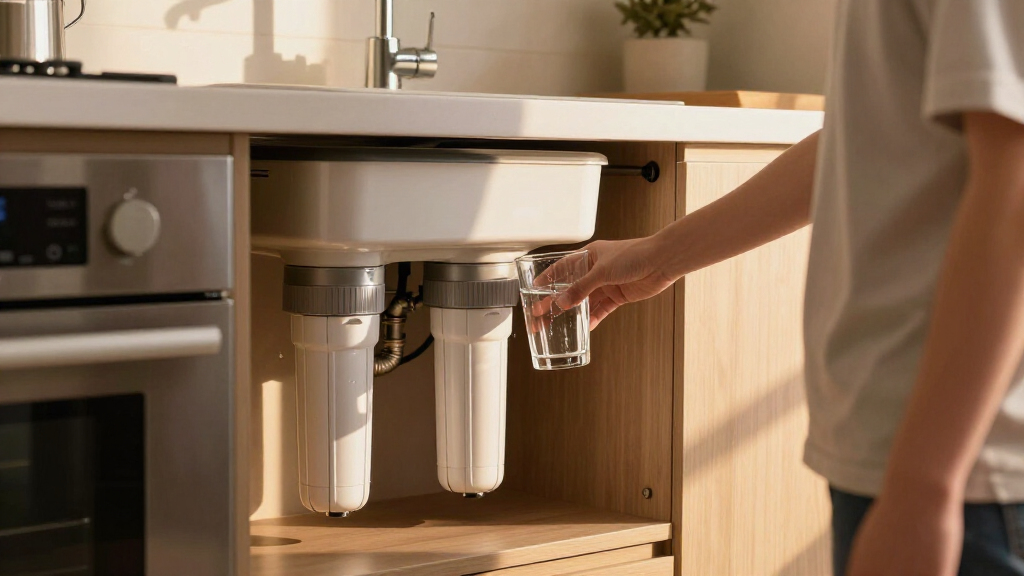
An honest disclosure: this isn’t a whole-house system at all — it’s an under-sink reverse osmosis unit, and that’s precisely its value in this roundup. Every other pick here leaves dissolved solids untouched; the K5 attacks them directly, handling inlet water up to 1000 ppm TDS. Pair it with something like the LiquaGen upstream and you get great whole-house water plus exceptional drinking water at the tap. Compared with the iSpring WCFM400K, which specializes in well-water metals for the whole house, the K5 specializes in a single faucet with multi-stage RO purification. Drawbacks are real, though: it needs corded electrical power, weighs over 13 kg under your sink, and documentation on filter replacement is thin.
Pros:- Multi-stage reverse osmosis removes dissolved solids other systems can’t
- Handles inlet water up to 1000 ppm TDS
- Compact under-sink installation keeps counters clear
Cons:- Requires electrical power to operate
- Over 13 kg with limited public documentation on maintenance
Best for: Buyers who already have whole-house filtration and want reverse osmosis polishing for drinking and cooking water
Not ideal for: Anyone seeking actual whole-house coverage — this treats one faucet, not the showers, appliances, or ice maker
- Filtration Method:Reverse Osmosis
- Installation Type:Under sink
- Power Source:Corded electric
- Max Supported TDS:1000 ppm
- Upper Temperature Rating:100 °F
- Item Weight:13.52 kg
- Material:Polypropylene
Our verdict“A drinking-water specialist, not a whole-house solution — pair it with a broader system rather than substituting it.”
iSpring WGB32BM Whole House Water Filter System for Iron and Manganese Removal
This is the budget-friendly entry point for iron and manganese problems, and it earns its spot on price and simplicity. Unlike its sibling the WCFM400K, which uses regenerating media and a digital valve, the WGB32BM uses straightforward 20-inch cartridges — cheaper to buy, easier to understand, and genuinely DIY-friendly with clear instructions and online support. It also adds chlorine removal the WCFM400K doesn’t offer, covering more of a family’s everyday needs in one housing. At 100,000 gallons of capacity and up to 15 GPM, it comfortably serves a family of four for about a year per cartridge set. Limits are clear: iron removal caps at 3.0 ppm and manganese at 1.0 ppm, so severe well contamination outruns it, and TDS is off the menu entirely.
Pros:- Removes iron, manganese, sediment, chlorine, and rust in one system
- 100,000-gallon capacity lasts up to a year for a family of four
- Genuinely easy DIY installation with detailed manual and support
- NSF/ANSI tested for quality and safety
Cons:- Caps out at 3.0 ppm iron and 1.0 ppm manganese
- Does not reduce TDS or handle severe contamination
Best for: Budget-conscious families of four with moderate iron and manganese levels who want DIY installation
Not ideal for: Homes with heavy well contamination above 3 ppm iron, or buyers wanting zero ongoing maintenance — cartridges must be replaced
- Filter Capacity:100,000 gallons
- Flow Rate:Up to 15 GPM
- Inlet/Outlet:1 inch NPT
- Cartridge Size:20 in. × 4.5 in.
- Filtration Rating:5 microns
- Max Iron Removal:3.0 ppm
- Max Manganese Removal:1.0 ppm
- Warranty:1 year
Our verdict“The most affordable way to tackle moderate iron problems house-wide, as long as your contamination levels stay within its limits.”
iSpring WGB31BCM Whole House Water Filter System with Clear Filter Housing
Most whole house systems assume you have a basement with room to spare, but the iSpring WGB31BCM takes a different approach. At roughly 24 inches wide, it fits where bulkier options like the iSpring WGB32B would be a squeeze, which makes it a natural fit for apartments, condos, and vacation properties. The transparent housing genuinely changes maintenance habits — you can see sediment accumulating instead of guessing on a calendar, and the pressure release buttons make filter swaps far less messy than standard housings. The tradeoff is capacity: 50,000 gallons is half of what the WGB32B offers, so a large family will burn through filters faster. It also won’t touch dissolved solids, so well water with heavy mineral content is beyond its scope.
Pros:- Reduces iron, manganese, chlorine, and sediment in one compact unit
- Transparent housing lets you visually monitor filter condition
- Pressure release buttons make filter changes quick and mess-free
- Compact footprint suits tight installation spaces
Cons:- Does not reduce total dissolved solids (TDS)
- Half the capacity of larger 3-stage rivals, raising long-term filter costs
Best for: Small households, apartment dwellers, and vacation property owners who want multi-contaminant filtration without dedicating a wall to it
Not ideal for: Large families with heavy water usage — the 50,000-gallon capacity means frequent and costly filter replacements
- Filtration Stages:3
- Flow Rate:15 GPM
- Dimensions:24.5″ x 18″ x 8″
- Capacity:50,000 gallons or 12 months
- Target Contaminants:Iron, manganese, chlorine, sediment, odors
- Warranty:1 year
Our verdict“This is the pick for small-space dwellers who want visible filtration performance without a commercial-scale footprint.”
GE Whole House Water Filtration System GXWH20T
The GE GXWH20T is the cheapest credible entry point into whole house filtration on this list. It’s a single-housing sediment and rust reducer, not a multi-stage workhorse — don’t expect the chlorine and odor reduction you’d get from the iSpring WGB32B or the scale protection of the Express Water 3-Stage. What you get instead is a straightforward, well-built housing with a bypass valve that lets you swap filters without shutting off water to the house, plus an included installation kit that keeps setup costs down. The catch: no filter ships in the box, and GE recommends replacement every three months, which adds up. Compared with the Waterdrop WHF2E-PC’s six-month interval, ongoing costs run higher despite the lower sticker price.
Pros:- Lowest upfront cost among systems in this lineup
- Bypass valve allows filter changes without shutting off household water
- Included installation kit and clear sump simplify setup and monitoring
Cons:- Filter sold separately, adding hidden cost to the purchase
- Three-month replacement cycle makes long-term costs higher than multi-stage rivals
- Single-stage design only handles sediment and rust
Best for: Budget-conscious homeowners who mainly need sediment and rust protection and already have basic plumbing skills
Not ideal for: Anyone expecting chlorine, odor, or chemical reduction — this single-stage system doesn’t address those contaminants
- Model Number:GXWH20T
- Brand:GE
- Stages:1 (single housing)
- Filter Replacement:Every 3 months
- Compatible Filters:FXWTC, FXUSC, FXWPC, FXWSC
- Included Components:Filtration housing, install kit (filter not included)
- Features:Bypass valve for easy filter changes
Our verdict“A sensible, low-commitment entry point for sediment problems — just budget for the filters it doesn’t include.”
iSpring WGB32B Commercial-Grade Whole House Water Filter System
If one system balances capacity, contaminant coverage, and DIY friendliness better than the rest here, it’s the iSpring WGB32B. With 100,000 gallons of filter life, it doubles the endurance of both the WGB31BCM and the Waterdrop WHF2E-PC, translating to fewer replacements and lower cost per gallon over time. The three-stage design removes up to 99% of chlorine, sediment, rust, taste, and odor while leaving healthy minerals intact — a deliberate contrast with reverse-osmosis approaches. Standard 1-inch NPT fittings and 20 x 4.5-inch big blue filters keep replacement cartridges cheap and widely available, an advantage over proprietary designs. It won’t reduce TDS, and buyers with iron-heavy well water should look at the iron-specific iSpring WGB32BM instead, but for typical municipal supply, this is the benchmark.
Pros:- 100,000-gallon capacity halves replacement frequency versus smaller rivals
- Removes up to 99% of chlorine, sediment, rust, taste, and odor
- Standard 1″ NPT fittings and common filter sizes keep replacements affordable
- Preserves healthy minerals in the water
Cons:- Does not reduce TDS for buyers wanting higher purity
- Ongoing filter replacement costs still apply
- Larger footprint demands more installation space than compact models
Best for: Suburban homeowners on municipal water who want long filter life and broad chlorine and sediment coverage with DIY installation
Not ideal for: Well water owners with iron or TDS concerns — this system targets chlorine and sediment, not dissolved minerals
- Filtration Capacity:100,000 gallons
- Flow Rate:Up to 15 GPM
- Inlet/Outlet:1″ NPT
- Filter Size:20″ x 4.5″
- Micron Rating:5 microns
- Contaminant Reduction:Up to 99% chlorine, sediment, rust, taste, odor
- Installation:DIY-friendly with included guides
Our verdict“The most balanced choice for average households — long capacity, broad coverage, and cheap standard filters in one package.”
Waterdrop WHF2E-PC Whole House Water Filter System, 4-Stage Filtration
The Waterdrop WHF2E-PC earns its spot by adding a fourth filtration stage that most three-stage rivals skip, targeting VOCs and scale buildup alongside the usual chlorine and sediment. That extra stage matters for city-water subscribers worried about chemical contaminants — coverage the GE GXWH20T can’t touch and the iSpring WGB32B only partially matches. The insert-fit filter design also simplifies what is otherwise a fiddly process on some competitors. Two things hold it back from a higher ranking: Waterdrop doesn’t publish a flow rate, which is a real gap for anyone running multiple bathrooms simultaneously, and the four-stage layout adds plumbing complexity that first-time installers may find intimidating. At 50,000 gallons per six months, capacity sits mid-pack rather than leading.
Pros:- 4-stage filtration adds VOC and scale reduction most rivals lack
- NSF/ANSI 372 certified lead-free components
- Insert-fit filter design simplifies replacement
- Handles 50,000 gallons per filter set
Cons:- No published flow rate, making sizing for large households a gamble
- 6-month filter life means higher recurring costs than 100,000-gallon competitors
- More complex installation than simpler systems
Best for: Municipal water users specifically concerned about VOCs, chlorine, and scale who want an extra filtration stage over standard 3-stage systems
Not ideal for: Renters or DIY novices without plumbing experience — the 4-stage design is more involved to install than single or 2-stage units
- Filtration Stages:4
- Capacity:50,000 gallons
- Filter Life:6 months
- Inlet/Outlet Size:1 inch FNPT
- Certifications:NSF/ANSI 372 (lead-free)
- Target Contaminants:Chlorine, sediment, rust, odors, VOCs, scale
- Designed For:Municipal tap water
Our verdict“Choose this if VOC reduction on city water is a priority and you can live without a published flow rate.”
Express Water Whole House Water Filter System, Anti-Scale, 3-Stage
Where the Express Water Anti-Scale system separates itself is pipe and appliance protection. Its scale-inhibition stage addresses the hard-water buildup that shortens water heater and dishwasher life — something the iSpring WGB32B doesn’t attempt without a separate softener. Pressure gauges on each stage let you monitor performance at a glance, a maintenance advantage over systems like the WGB32B that rely on calendar tracking. The 100,000-gallon interval matches iSpring’s best, and NSF-certified filters provide assurance that cheaper unbranded alternatives can’t. The caveats are real, though: the 0.25 gallon-per-second flow rate works out to 15 GPM, adequate but not generous for simultaneous heavy use, it won’t reduce TDS, and Express Water recommends installing it upstream of a softener — so households with serious hardness will still need additional equipment.
Pros:- Anti-scale stage protects pipes, water heaters, and appliances
- Pressure gauges on each stage for at-a-glance monitoring
- 100,000-gallon or 6-12 month filter interval
- NSF certified filters for safety and quality
Cons:- Does not reduce TDS or minerals for those wanting higher purity
- Best performance requires installation before a softener, adding system complexity
- Replacement intervals vary with water quality, making costs less predictable
Best for: Homeowners in hard-water regions who want to protect pipes and appliances from scale while filtering the whole house
Not ideal for: Buyers expecting a water softener substitute — serious hardness still requires a dedicated softener downstream
- Type:Whole house water filter system
- Stages:3 (anti-scale)
- Connection Size:1 inch
- Flow Rate:0.25 gallons per second (~15 GPM)
- Pressure Range:45-80 PSI
- Filter Replacement Interval:6-12 months or 100,000 gallons
- Certifications:NSF certified
- Recommended Installation:At water inlet, before softener
Our verdict“The strongest choice here if scale damage to plumbing and appliances is your primary concern rather than drinking-water purity.”
Express Water Whole House Water Filter System, 3-Stage
Cartridge changes are where most whole house systems lose their charm, and Express Water’s quick-change design is the standout here. Unlike the WF3-01, which requires a wrench and more hands-on effort per stage, this system lets homeowners swap filters without turning the job into a plumbing afternoon. The included spin-down sediment pre-filter is reusable at 50 microns, which means the first line of defense can be rinsed rather than replaced — a real cost saver over years of ownership.
The tradeoff is transparency: no published flow rate, so buyers with larger homes are buying partly on faith. Compared with the Express Water Ultimate Protection model, this one lacks stainless steel housing and pressure gauges, making it a leaner, less instrumented package.
Pros:- Quick-change cartridges simplify routine maintenance
- Reusable 50-micron spin-down sediment filter cuts replacement costs
- Up to 100,000 gallon capacity for long service intervals
- 1-inch connections support standard household plumbing
Cons:- No published flow rate makes sizing a gamble
- Lacks pressure gauges and premium housing found in step-up models
Best for: Homeowners who prioritize painless filter changes and want a reusable pre-filter to cut long-term cartridge costs
Not ideal for: Buyers with high water demand or large households — the missing flow rate spec makes it hard to confirm it can keep up with multiple simultaneous showers
- Filter Type:3-Stage
- Connection Size:1 inch
- Capacity:Up to 100,000 gallons
- Filter Material:Spin down sediment filter, 50 micron reusable filter
- Maintenance:Quick-change cartridges
Our verdict“This pick makes the most sense for buyers who dread maintenance and want the simplest cartridge-change experience in the lineup.”
WF3-01 3-Stage Whole House Water Filtration System
For homes wrestling with lead, mercury, arsenic, cadmium, or chromium, this WF3-01 setup goes further than most in this roundup. The GAC+KDF stage is doing targeted heavy metal work that the iSpring WGB21B simply doesn’t attempt — that model focuses on chlorine and taste, not dissolved metals. The 20-inch filter housings also mean longer contact time and better contaminant reduction than smaller 10-inch alternatives.
The maintenance story is unusually thoughtful: built-in pressure gauges and timers tell you when performance is degrading instead of forcing you to guess, and included fittings adapt to both 3/4-inch and 1-inch lines. The catch is footprint — at 31 inches tall and 23 inches wide, it’s among the bulkiest options here, and cartridge replacement costs across three stages add up faster than the two-stage iSpring.
Pros:- GAC+KDF stage targets lead, mercury, arsenic, cadmium, and chromium
- Pressure gauges and timers take guesswork out of maintenance
- Flexible 3/4-inch or 1-inch NPT fittings fit varied plumbing setups
- Includes a housing cleaning brush for upkeep
Cons:- Three-stage cartridge replacement costs accumulate over time
- Bulky footprint at 31″ x 23″ x 8″
- Installation demands more plumbing knowledge than simpler two-stage options
Best for: Households on older plumbing or wells where verified heavy metal reduction is the top priority
Not ideal for: Tight utility closets or cramped garages — this is one of the largest systems in the roundup and needs real wall space
- Filter Type:Sediment, Carbon Block, GAC+KDF
- Number of Filters:3
- Filter Dimensions:20″ x 5.5″
- Overall Dimensions:31″ H x 23″ W x 8″ D
- Inlet/Outlet Fittings:3/4″ NPT or 1″ NPT
- Included Accessories:Pressure gauges, timers, housing cleaning brush, maintenance valves
Our verdict“If dissolved metals in your water are the problem, this is the most targeted answer in the batch — just budget for the space and the cartridges.”
Express Water Whole House Water Filter System, 3-Stage Ultimate Protection
This is the heavy hitter of the Express Water lineup, and the differences from its sibling (Express Water 3-Stage, B0DFBJK5WG) are tangible rather than cosmetic. The stainless steel construction and freestanding frame mean it survives mechanical rooms that would stress plastic-housed competitors, and the 17 gpm flow rate is published, verified, and high enough to feed two bathrooms and an appliance at once — something the spec-shy sibling can’t claim.
The polyphosphate stage addresses scale buildup, a feature only the dedicated anti-scale Express model matches here. Be clear about the limits, though: it does not reduce TDS, so homes with very high dissolved solids still need an RO point-of-use unit. At 63 pounds and 30 inches tall, it also demands a committed installation spot.
Pros:- 17 gpm flow rate supports simultaneous whole-house demand
- Stainless steel construction with pressure gauges for monitoring
- Polyphosphate stage reduces scale buildup in pipes and appliances
- 100,000 gallon capacity with 6-12 month filter life
Cons:- Does not reduce TDS or dissolved solids
- 63-pound freestanding unit requires significant dedicated space
- 20-80 psi operating range excludes very high-pressure or low-pressure setups
Best for: Larger households that need verified high flow, scale control, and hardware built to last decades
Not ideal for: Buyers expecting total purification — TDS passes through untouched, so it’s not a substitute for drinking-water RO filtration
- Filter Life Cycle:6 months
- Capacity:100,000 gallons
- Maximum Flow Rate:17 gpm
- Operating Pressure Range:20-80 psi
- Maximum Supported TDS:800 ppm
- Material:Stainless Steel
- Purification Method:Activated Carbon, KDF, Polyphosphate
- Dimensions:29″ L x 8.5″ W x 30″ H
- Weight:63 lbs
Our verdict“The most robustly built and best-instrumented pick in this batch — worth it for big households, overkill for a small home.”
Aquaboon 3-Stage Whole House Water Filter System
Aquaboon’s pitch is simple: full-size 3-stage filtration at a two-stage price. Compared with the iSpring WGB21B, you get a third stage of contaminant coverage — heavy metals and VOCs alongside chlorine and sediment — while still landing at a budget-friendly position. The 5-micron rating is finer than the 50-micron spin-down on Express Water’s basic model, meaning it catches finer sediment that would otherwise reach your fixtures.
The box is genuinely complete for the money: wrench, bracket, screws, pressure gauges, and release buttons included, where other manufacturers nickel-and-dime you on fittings. The tradeoff is refinement rather than capability — the WF3-01 offers better monitoring with its maintenance timers, and the Express Water Ultimate outclasses it on build materials. Some plumbing familiarity is still needed despite the leak-proof fittings.
Pros:- 5-micron filtration is finer than many similarly priced systems
- Works with both well and municipal water sources
- Complete installation kit includes wrench, bracket, gauges, and release buttons
- Leak-proof design with extended filter life
Cons:- Requires basic plumbing knowledge for proper installation
- Bulky 3-stage footprint needs dedicated mounting space
- No filter-life timer or replacement indicator
Best for: Budget-conscious buyers who want 3-stage, 5-micron filtration without paying premium-system prices
Not ideal for: Buyers who want set-and-forget monitoring — there’s no timer or digital indicator, so you track filter life yourself
- Filter Stages:3
- Micron Rating:5 Micron
- Filter Size:20″ x 4.5″
- Compatible Water Sources:Well and municipal
- Included Accessories:Wrench, bracket, screws, pressure gauges, release buttons
Our verdict“The smartest spend for cost-focused buyers who refuse to give up a third filtration stage or fine sediment capture.”
iSpring WGB21B 2-Stage Whole House Water Filtration System
Not every home needs three stages, and the WGB21B proves it. Sized for a family of four at 50,000 gallons, it strips out chlorine, taste, odor, sediment, and VOCs while leaving healthy minerals intact — a deliberate choice the Express Water Ultimate shares but at triple the footprint and weight. At 26 pounds versus 63, this is the pick for crawl spaces and tight garages where the bulkier systems simply won’t fit.
Compared with the WF3-01, you give up the third stage’s heavy metal targeting, so well water with metal issues is off the menu. But for typical municipal supply, the 15 gpm flow rate comfortably serves a modest household, and annual filter changes with a 100°F temperature ceiling keep upkeep simple. It won’t touch TDS — no carbon system here will.
Pros:- Compact and lightweight at 11.7 kg for tight installation spaces
- Retains beneficial minerals while removing chlorine and VOCs
- DIY-friendly with included wrench and pressure release valve
- Handles TDS levels up to 2500 ppm without clogging prematurely
Cons:- No heavy metal or iron reduction capability
- Annual filter replacement is still a recurring cost
- Does not reduce TDS
Best for: Small to mid-size households on municipal water who want chlorine-free water without a bulky 3-stage commitment
Not ideal for: Well water users or homes with heavy metal contamination — the 2-stage design skips the KDF stage needed for that work
- Filter Capacity:50,000 gallons
- Flow Rate:15 gpm
- Inlet/Outlet Size:1 inch
- Filter Life Cycle:12 months
- Maximum Operating Pressure:80 psi
- Maximum Temperature:100 °F
- Maximum Supported TDS:2500 ppm
- Dimensions:26″ L x 19″ W x 11″ H
- Weight:11.7 kg
Our verdict“The right-sized choice for a typical family of four on city water — buy it if space and simplicity matter more than contaminant breadth.”
How We Picked
I evaluated each system against the factors that actually determine long-term satisfaction: filtration performance against specific contaminants, flow rate and pressure impact, housing build quality, installation complexity, and total cost of ownership including replacement filters over several years. A system that filters brilliantly but starves your showers of pressure, or one that’s cheap to buy but expensive to feed with cartridges, scored lower than balanced performers. I also weighted versatility — systems that adapt to different water conditions through swappable cartridges or programmable backwashing ranked higher for general audiences.
The ranking order reflects a simple logic: systems that solve the broadest range of water problems with the fewest compromises sit at the top, while niche products rank based on how well they serve their specific buyer. A dedicated iron removal system like the WCFM400K isn’t ranked as a universal pick, but within the well-water segment it’s excellent. I flagged every system’s ideal buyer and its real drawbacks so the list works as a decision tool rather than a catalog.
Factors to Consider When Choosing Whole House Water Filtration Systems
Before picking a system, it helps to understand what drives performance and cost differences across the category. These are the factors that separate a satisfying purchase from an expensive mistake.Test Your Water Before You Buy Anything
The single most common mistake in this category is buying a filtration system before knowing what’s actually in your water. City water typically contains chlorine, chloramine, sediment, and varying levels of disinfection byproducts — problems that carbon and sediment stages solve well. Well water, by contrast, may carry iron, manganese, hydrogen sulfide, bacteria, or hardness, and each requires a different treatment approach. A basic $30 test kit or a county extension lab report can save you from buying an iron-specific system you don’t need, or worse, buying a general carbon system that leaves your actual problem untouched. I recommend testing for at least hardness, iron, pH, and total dissolved solids. Match the system stages to your test results rather than assuming more stages always means better water.
Flow Rate and Household Size
Every filter creates some resistance to flow, and undersized systems cause noticeable pressure drops when two fixtures run at once. Manufacturers list flow rates in gallons per minute, but real-world performance depends on your incoming pressure and pipe size. A household of one or two people can live with a 10 GPM system; families of four or more running simultaneous showers, laundry, and dishwashers should target 15 GPM or higher. Three-stage systems compound the pressure loss across each housing, which is one reason commercial-grade housings with larger 4.5-inch cartridges outperform slim residential units. If your current pressure is already marginal, factor in a pressure-boosting solution or choose a system with oversized housings.
Upfront Price Versus Lifetime Cost
The sticker price is only part of the math. Cartridge-based systems require replacements every three to twelve months, and multi-stage systems need multiple cartridges per cycle — costs that can exceed the purchase price within a few years. Media-based systems like the LiquaGen catalytic carbon unit cost more upfront but their media can last three to five years before replacement. Sit down and estimate five-year costs: purchase price plus roughly twenty filter changes for a quarterly-replacement system like the GE. Also check cartridge availability, because proprietary filters lock you into one supplier’s pricing, while standard 10-inch or 20-inch Big Blue cartridges are commodity items available from many brands.
Installation: DIY or Plumber
Most whole house systems require cutting into your main water line, mounting the housing bracket to a wall or stud, and adding a bypass valve so you can change filters without shutting down the house. Handy homeowners with PEX or accessible copper lines can handle basic cartridge systems in an afternoon, and kits like the GE that include fittings and a bypass simplify the job. Media-based tank systems, UV stages, and digital control valves usually warrant a plumber — budget $200 to $600 for professional installation. One overlooked detail: install the system before the water heater, not after, so heated water and the appliance itself benefit from filtration. Also leave at least a foot of clearance below housings for cartridge changes.
Filtration Versus Softening: Know the Difference
Filtration removes contaminants; softening exchanges calcium and magnesium for sodium through ion exchange. Anti-scale systems advertised as salt-free alternatives condition water to reduce scale buildup, but they do not remove hardness minerals and will not eliminate existing limescale the way a softener does. If your real problem is hard water spots, appliance scale, and dry skin, no filter on this list fully solves it — you may need a softener paired with a filtration system. On the other hand, if your issue is chlorine taste, sediment, or metallic staining, a softener alone won’t help. Many homes end up with both installed in sequence, which affects placement, budget, and drain access planning.
When UV Protection Is Worth It
UV stages add cost and an annual lamp replacement, but they’re the only stage that neutralizes bacteria, viruses, and microorganisms. Homes on private wells with coliform concerns, homes in areas with boil-water advisories, or seasonal cabins with untreated water sources are the clear candidates. For most municipal-water homes, chlorine already controls microbial growth, and a UV stage is paying for protection you don’t need. If you do go UV, remember the lamp must stay powered continuously and sediment pre-filtration is mandatory — cloudy water shields organisms from the UV light. Size the UV unit to your peak flow rate, not your average, because exceedances let organisms pass through untreated.
Frequently Asked Questions
Do whole house filtration systems reduce water pressure in the shower?
Some pressure loss is unavoidable because water has to pass through filter media, but well-designed systems keep the drop under 5 to 10 PSI, which most households barely notice. The systems that cause problems are undersized ones — small 10-inch cartridges installed on homes with three or more bathrooms, or multi-stage setups run at flow rates above their rating. Larger 4.5-inch Big Blue housings maintain flow far better than slim cartridges, which is why commercial-grade units like the iSpring WGB32B perform well in bigger homes. If you’re already starting with low municipal pressure, measure it before installing and choose a system rated well above your household’s peak demand. Clogged cartridges also cause pressure drops, so a sudden decline usually signals it’s replacement time rather than a system flaw.
How often do I really need to replace the filters, and what happens if I wait?
Sediment filters typically last 3 to 6 months, carbon filters 6 to 12 months, and specialty media like KDF or catalytic carbon can run 2 to 5 years depending on water quality and usage. Waiting too long doesn’t just reduce filtration quality — exhausted carbon can release previously captured contaminants back into the water, and oversaturated sediment cartridges restrict flow and strain the housing seals. Well-water homes with heavy sediment will burn through pre-filters much faster than city-water homes, sometimes in 6 weeks. Track your replacement dates from day one, and watch for the telltale signs: pressure drop, returning chlorine taste, or visible discoloration in clear housings like the iSpring WGB31BCM’s. Budgeting for filters as a recurring cost, not just the purchase price, gives you a realistic picture of ownership.
Is a 3-stage system actually better than a 2-stage or single-stage one?
Not automatically — the stages matter more than the count. A three-stage system usually chains a sediment pre-filter, a carbon filter for chlorine and chemicals, and a specialty cartridge for iron, scale, or fine particulates, so each stage does a distinct job. A two-stage system like the iSpring WGB21B covers sediment and chlorine well, and if that’s all your water test shows, the third stage is money spent on nothing. Where three stages genuinely earn their keep is well water or homes with metallic staining, chemical odors, or heavy sediment loads. Remember that every additional housing adds pressure drop, installation complexity, and another cartridge to replace. Match the stage count to your test results rather than assuming the biggest system wins.
Can I install one of these myself, or do I need a plumber?
Standard cartridge-based systems with standard threaded or push-fit connections are realistic DIY projects if you’re comfortable cutting pipe, sweating copper or working with PEX, and mounting a bracket solidly to a wall. Systems that ship with installation kits and bypass valves, like the GE GXWH20T, are designed with the DIYer in mind and typically take a few hours. Media tank systems, backwashing digital control valves like the iSpring WCFM400K, and UV stages involve drain connections, electrical wiring, and precise flow configuration — those jobs justify a plumber at $200 to $600. Wherever you install, add a bypass valve if the system doesn’t include one, because it lets you change filters without shutting off water to the entire house. And check your local code, since some jurisdictions require a permit for main-line plumbing modifications.
Will a whole house filtration system make my hard water problems go away?
No — filtration and hardness are separate problems, and confusing them is the most expensive misunderstanding in this category. Hardness comes from dissolved calcium and magnesium, which pass straight through carbon and sediment filters. Anti-scale systems like the Express Water 3-Stage Anti-Scale use template-assisted crystallization to reduce new scale formation, which helps protect appliances, but they don’t remove the minerals or eliminate existing limescale, and they won’t deliver the slick-rinse feel of softened water. If hard water is your primary complaint, you need a salt-based softener, ideally paired with a whole house filter installed upstream. The filter protects the softener’s resin from sediment and chlorine damage, extending its life. Test your hardness first — under 7 grains per gallon rarely justifies a softener at all.
Conclusion
The right pick depends on your water source, household size, and how much maintenance you’ll tolerate. For best overall, the iSpring WGB32B Commercial-Grade handles the widest range of water problems with strong flow and durable housings, making it the safest default for typical city-water homes. The best value goes to the iSpring WGB21B 2-Stage, which delivers solid sediment and chlorine protection at a low price with inexpensive, widely available cartridges — ideal for smaller homes and first-time buyers who want simplicity. For the best premium setup, the iSpring WCFM400K with Digital Control brings automatic backwashing and targeted iron and manganese treatment that cartridge systems can’t match. Best for beginners is the GE GXWH20T: the included installation kit and tool-free cartridge changes make it the easiest entry point, as long as you accept quarterly filter swaps. Specific needs round out the list: well water with bacterial concerns points to the WF3-03 with UV, chlorine and chemical removal at scale favors the LiquaGen’s long-life catalytic carbon media, and budget three-stage coverage is covered by the Express Water standard 3-Stage. Whatever you choose, start with a water test — it’s the cheapest step in the process and the one that guarantees you buy the right system the first time.
Evergreen bestsellers Picks
bestsellers
As an affiliate, we earn on qualifying purchases.