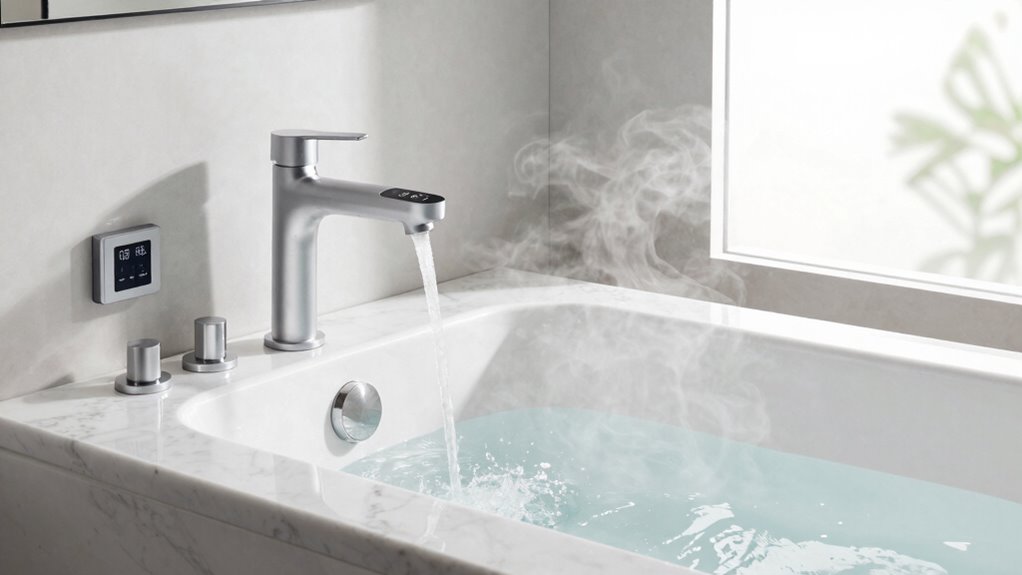

Anti-scald planning is a key part of whole-house water thinking, ensuring safety at all fixtures. By controlling water temperature system-wide, you prevent burns and meet safety standards. Installing mixing valves and thermostatic controls helps blend hot water to safe levels before it reaches faucets. Relying solely on adjusting water heaters isn’t enough, so proactive planning is essential. Keep exploring to discover how integrating these safety measures creates a truly safe household environment.

Get home appliances delivered free — and shop member deals
- Fast, free delivery on millions of items
- Access to Prime Big Deal Days deals on October 6–7
- Prime Video, Amazon Music and more included
Key Takeaways
- Anti-scald planning ensures hot water safety throughout the entire plumbing system, not just at the water heater.
- It involves installing mixing valves and thermostatic controls early in the system for consistent temperature regulation.
- Whole-house water thinking integrates safety measures across all fixtures, reducing burn risks at every faucet.
- Compliance with safety standards and building codes ensures anti-scald measures are system-wide and effective.
- Proactive planning creates a unified, safety-focused plumbing system that minimizes injury risks for all residents.
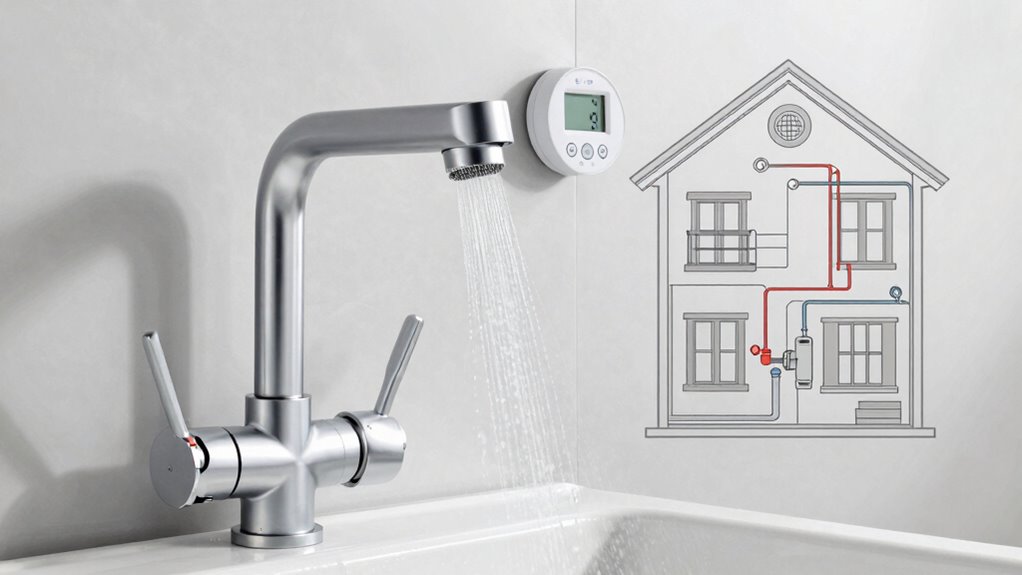
Ever wondered how to prevent painful burns from hot water? It all starts with effective anti-scald planning, which plays an essential role in your entire home’s water safety. You might think that just turning down the water heater is enough, but true prevention involves understanding how temperature regulation and safety standards work together across your plumbing system. When you consider your whole-house water thinking, you’re adopting an all-encompassing approach that minimizes risks at every faucet and fixture. This means designing your system with safety standards in mind, ensuring that hot water delivered to sinks, showers, and tubs remains at a safe temperature, typically below 120°F (49°C). This not only helps prevent burns but also reduces the likelihood of scald injuries, especially for children and the elderly.
Effective anti-scald planning ensures safe, whole-house hot water temperatures, protecting everyone from burns and injuries.
Your anti-scald planning should focus on controlling water temperature early in the system, rather than relying solely on individual fixtures to be adjusted. Installing mixing valves or thermostatic controls at key points ensures that hot water is blended to a safe temperature before it reaches your taps. These devices are essential because they regulate temperature more precisely than manual adjustments, adhering to safety standards designed to protect users from scalding. Proper temperature regulation becomes a cornerstone of your whole-house water thinking, aligning safety with comfort and efficiency. When your plumbing system incorporates these devices, you’re proactively reducing the risk of accidental burns, even if someone forgets to check the water temperature manually.
Moreover, integrating anti-scald features into your plumbing system aligns with safety standards set by organizations like the American Society of Mechanical Engineers or local building codes. These standards are in place to protect residents and ensure that homes meet minimum safety requirements. When you plan your anti-scald system, you’re not just installing a device; you’re adopting a safety-first mindset that considers how hot water travels through your entire home. Understanding safety standards ensures that your system complies and functions effectively in protecting your family. This holistic approach encourages you to think beyond individual fixtures and view your plumbing as a connected network that must work together to keep everyone safe. Incorporating whole-house water thinking ensures comprehensive safety measures are in place throughout your home’s plumbing system. Additionally, temperature regulation is a key component that helps maintain consistent safety levels across all fixtures.
In essence, anti-scald planning isn’t just about preventing burns—it’s about creating a thoughtful, whole-house water management system. By focusing on temperature regulation and following safety standards, you’re ensuring that hot water is delivered safely and reliably throughout your home. This proactive planning protects your loved ones from injury while also giving you peace of mind, knowing your entire water system is designed with safety at its core.
whole house anti-scald mixing valve
As an affiliate, we earn on qualifying purchases.
As an affiliate, we earn on qualifying purchases.
Frequently Asked Questions
How Does Anti-Scald Planning Impact Overall Water Conservation Efforts?
Anti-scald planning enhances your water conservation efforts by promoting water safety and reducing unnecessary water use. When you set safe water temperatures, you prevent accidental burns, which means you’re less likely to run extra water to cool down hot water. This risk mitigation not only protects your household but also conserves water overall, supporting sustainable practices. Implementing anti-scald measures guarantees efficient, safe water use that benefits both your family and the environment.
What Are the Cost Differences Between Various Anti-Scald Systems?
You get what you pay for, and that’s true with anti-scald systems. Cost comparison varies widely: manual mixing valves are the most affordable, while thermostatic and electronic systems cost more upfront but offer greater safety and convenience. System installation also influences costs; simpler devices usually need less labor, making them cheaper. Consider your safety needs and budget to choose the right system, balancing initial costs with long-term benefits.
Can Anti-Scald Devices Be Integrated Into Existing Plumbing?
Yes, you can integrate anti-scald devices into existing plumbing systems. These devices help with temperature regulation and guarantee safety standards are met by preventing sudden hot water surges. You’ll typically install them at fixtures or on the main water line, making it easier to upgrade your current setup without extensive remodeling. This integration offers enhanced safety while maintaining your home’s water efficiency and comfort.
How Often Should Anti-Scald Systems Be Inspected or Maintained?
A stitch in time saves nine, so you should inspect your anti-scald systems at least once a year. Regular checks guarantee proper temperature regulation and safety compliance, preventing potential burns. Look for any leaks, corrosion, or malfunctioning parts, and replace or repair as needed. Staying proactive keeps your whole-house water system safe and efficient, giving you peace of mind and protecting everyone from scalding hazards.
Are There Specific Regulations or Standards for Anti-Scald Installations?
Yes, there are specific regulations and standards for anti-scald installations. You need to follow safety standards set by local building codes and industry organizations like the ASSE or NSF. These regulations guarantee regulatory compliance, guiding proper installation and operation to prevent scald injuries. Always check your local requirements to ensure your anti-scald systems meet the necessary safety standards, helping protect users and avoid legal issues.
As an affiliate, we earn on qualifying purchases.
Conclusion
As you weave anti-scald planning into your whole-house water approach, remember it’s like planting seeds for safety and comfort. Each pipe, valve, and fixture acts as a gentle guardian, guiding the flow of peace through your home. When you nurture this system, you cultivate a sanctuary where warmth and well-being bloom in harmony. Embrace this thoughtful design—your home becomes a safe harbor, a steady heartbeat in the rhythm of everyday life.
As an affiliate, we earn on qualifying purchases.
As an affiliate, we earn on qualifying purchases.
NFL season / tailgating Picks
team gear
As an affiliate, we earn on qualifying purchases.