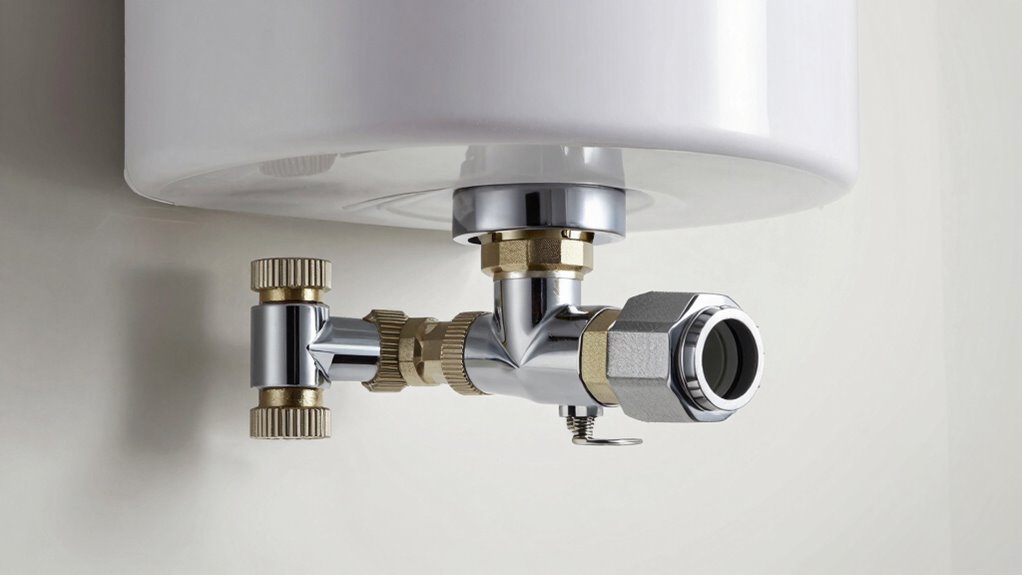

The smart leak-shutoff angle for water heaters focuses on early leak detection and automatic shutdown to prevent damage. You benefit from sensors that monitor for tiny drips or pressure changes, sending you instant alerts via your smartphone or home system. These systems often integrate seamlessly with existing setups, offering added safety and energy efficiency. By preventing water waste and damage, they protect your home. Keep exploring to discover how these innovative features can enhance your home’s safety and performance.

Get home appliances delivered free — and shop member deals
- Fast, free delivery on millions of items
- Access to Prime Big Deal Days deals on October 6–7
- Prime Video, Amazon Music and more included
Key Takeaways
- Focuses on early leak detection to prevent water damage and wastage.
- Integrates sensors and alerts for quick homeowner response.
- Emphasizes seamless installation and safety features for reliable operation.
- Promotes energy efficiency through automatic water shutoff.
- Supports smart home integration for remote monitoring and control.
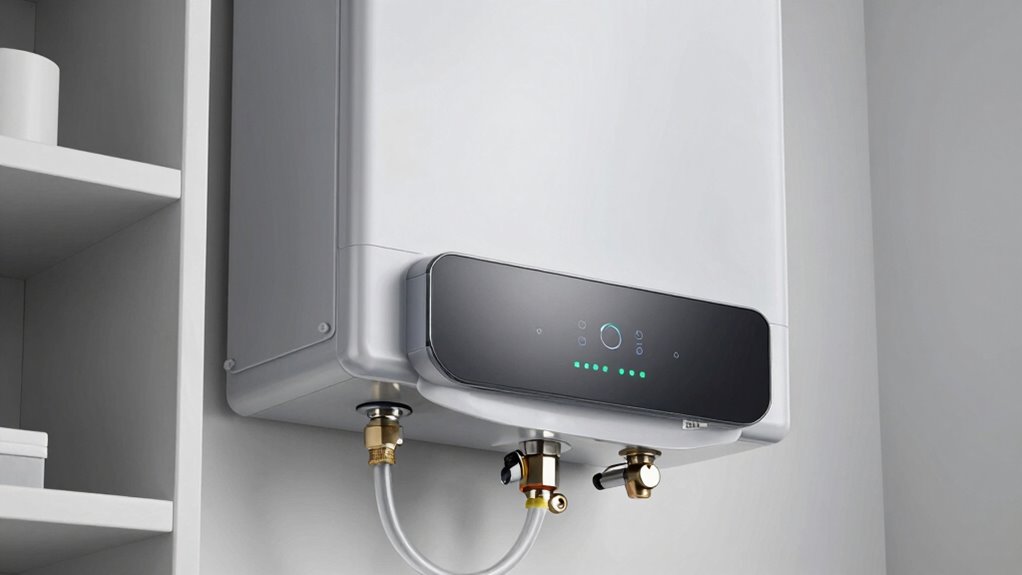
Smart leak-shutoff water heaters are revolutionizing how homeowners protect their properties from water damage. These innovative systems combine advanced sensor technology with automated shutoff features, giving you peace of mind and reducing the risk of costly water disasters. When you install a smart leak-shutoff water heater, you’re not just investing in convenience—you’re also making a smart move toward increasing your home’s energy efficiency and ensuring installation safety.
One of the key benefits of these systems is their ability to detect leaks early, often before you even notice a problem. Traditional water heaters can leak silently for days or weeks, causing extensive damage and mold growth. But with smart leak detection, sensors monitor for even the tiniest drips or changes in water pressure, alerting you immediately through your smartphone or home automation system. This prompt response minimizes water wastage and prevents damage, saving you money and effort on repairs. Furthermore, because these systems shut off water flow quickly when a leak is detected, they help conserve energy. Water heaters that are damaged by leaks often run inefficiently, wasting both water and electricity. Smart shutoff mechanisms ensure they operate only when necessary, making your home more energy-efficient and environmentally friendly.
Installation safety is another major advantage. These systems are designed with user safety in mind. They typically include fail-safe features that activate if sensors malfunction, preventing accidental water damage or electrical hazards. Plus, many models are built to integrate seamlessly with existing plumbing and electrical systems, making installation straightforward for qualified professionals. This means you don’t have to worry about complicated setups that could compromise your home’s safety. Also, because smart leak-shutoff water heaters are often equipped with remote monitoring and control, you can check their status and respond to alerts from anywhere. This added layer of safety means you’re always in the loop, ready to act if necessary, even when you’re away. Additionally, advanced sensor technology enhances the accuracy and reliability of leak detection, further safeguarding your property. Implementing smart home integration can optimize system performance and provide comprehensive monitoring. Incorporating biodiversity-friendly practices in your home maintenance can also contribute to a healthier environment by reducing water waste and minimizing chemical use. Moreover, staying informed about cybersecurity concerns related to connected devices helps protect your home network from potential digital threats.
smart leak detection water heater
As an affiliate, we earn on qualifying purchases.
As an affiliate, we earn on qualifying purchases.
Frequently Asked Questions
How Does the Leak-Shutoff Angle Impact Installation Options?
The leak-shutoff angle directly influences your installation options by determining where and how you place the leak detection sensors. A proper angle guarantees reliable activation of safety features, preventing water damage. If the angle isn’t ideal, leak detection might fail, risking damage. You need to install the sensor at the correct angle to maximize safety features, ensuring quick shutoff when leaks are detected and maintaining effective leak detection in your water heater setup.
Can the Angle Be Adjusted After Installation?
Think of the leak detection system as a vigilant guardian—its angle can be adjusted after installation, but it’s like tuning a delicate instrument. You’ll need to carefully reconfigure the safety mechanisms to guarantee the leak detection remains precise. While some models allow for angle tweaks, it’s best to follow manufacturer instructions, as improper adjustments might compromise the safety mechanisms, risking water damage or system failure.
What Maintenance Is Required for the Leak-Shutoff Angle?
You should regularly check your leak detection system and safety features to guarantee they’re functioning properly. Keep the leak-shutoff angle clean and free of debris, as buildup can hinder its performance. Test the system periodically to confirm it triggers correctly. Inspect for corrosion or damage, and replace parts if needed. Proper maintenance helps prevent water damage and ensures the leak detection and safety features work effectively when needed.
Does the Angle Affect Water Temperature Regulation?
Think of the leak-shutoff angle like the steering wheel of a car—precise calibration guarantees smooth control. The angle can influence water temperature regulation by affecting the sensor’s ability to detect leaks accurately, which in turn impacts temperature consistency. Proper angle calibration helps maintain ideal operation, preventing false alarms or missed leaks, so your water heater functions efficiently without compromising temperature stability.
Are There Compatibility Issues With Existing Water Heater Models?
You might face compatibility issues with existing water heater models due to material compatibility and safety standards. Some models use different materials that may not work well with the leak-shutoff angle, risking leaks or damage. Always check if the device meets safety standards and is compatible with your heater’s materials before installation. This guarantees reliable operation and helps prevent potential safety hazards, keeping your system safe and efficient.
automatic water shutoff valve for water heater
As an affiliate, we earn on qualifying purchases.
As an affiliate, we earn on qualifying purchases.
Conclusion
In conclusion, smart leak-shutoff water heaters offer an innovative way to protect your home from costly water damage. Did you know that water leaks cause over $10 billion in damages annually? With features like automatic shutoff angles, you can enjoy peace of mind, knowing your system detects leaks early and acts swiftly. Investing in this technology not only safeguards your home but also saves you money and stress in the long run.
As an affiliate, we earn on qualifying purchases.
water heater leak shutoff system
As an affiliate, we earn on qualifying purchases.
As an affiliate, we earn on qualifying purchases.
Fall yard work Picks
leaf blowers
As an affiliate, we earn on qualifying purchases.