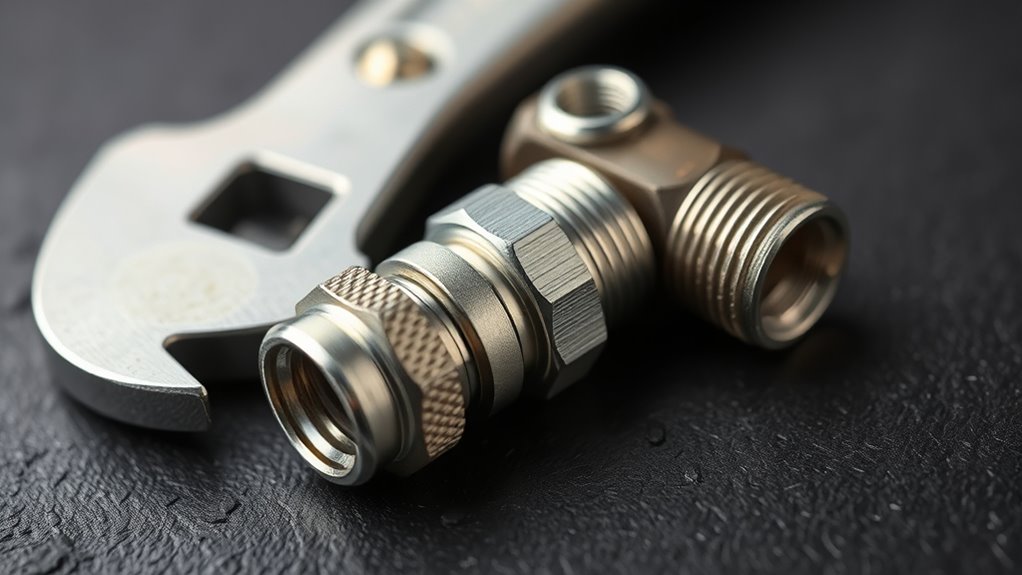

Before you start checking for leaks at unions and threads, inspect for signs of wear, corrosion, or damage. Tighten loose fittings carefully, but don’t over-tighten, and replace any damaged parts. Always clean threads thoroughly before applying the correct sealant—whether tape, paste, or liquid—and guarantee proper application. Regular inspections help catch issues early, preventing leaks and system failures. Continue below to learn detailed steps for effective sealing and maintenance.
Key Takeaways
- Regularly inspect unions and threaded connections for signs of corrosion, damage, or moisture to identify early leak risks.
- Use appropriate sealants like PTFE tape or thread paste, ensuring proper application for a secure, leak-proof fit.
- Check for damaged or worn threads; replace or repair components before sealing to maintain system integrity.
- Tighten fittings carefully, avoiding over-tightening that can damage threads or cause leaks.
- Clean threads thoroughly before sealing to ensure optimal adhesion and prevent leaks at connection points.
Preventing and Inspecting Leaks at Unions and Threads
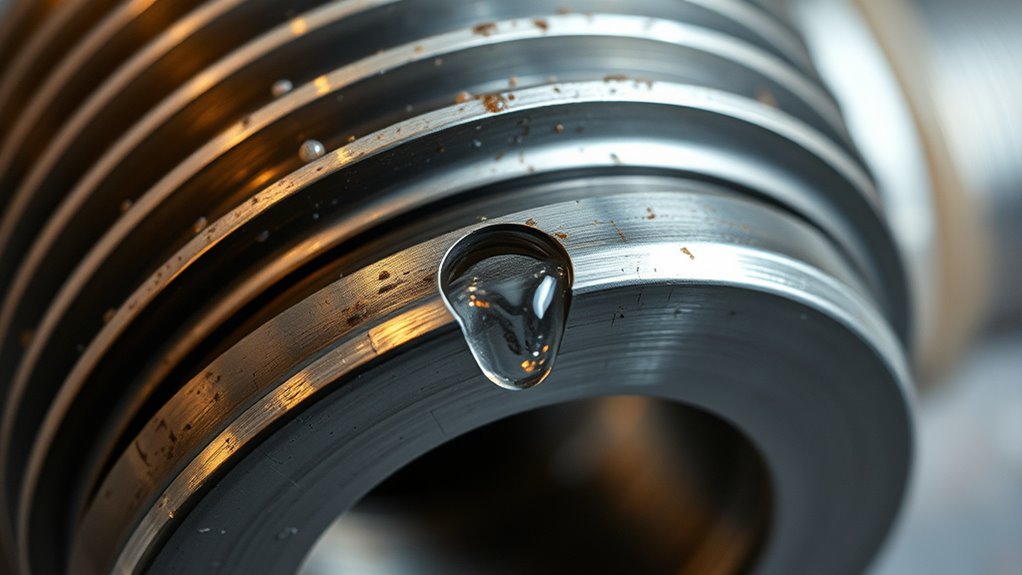
Leaks at unions and threads can cause serious security risks and disrupt your operations if not addressed promptly. When dealing with piping systems, you need to stay vigilant about potential leak points, especially at threaded connections. Proper use of thread sealants is essential; they help create a tight, leak-proof seal between threaded components. Before beginning any inspection or repair, ensure you have the right type of thread sealant for your application—whether it’s PTFE tape, thread paste, or liquid sealant—since each offers different benefits depending on pressure, temperature, and material compatibility.
One of the most critical steps in preventing leaks is conducting thorough union fitting inspections. Regularly check all union fittings for signs of wear, corrosion, or damage. Look for any visible leaks, moisture, or residue around the fittings, as these are early indicators of potential failure. If you notice any signs of leakage, don’t ignore them. Tighten loose fittings carefully, but avoid over-tightening, which can damage threads or deform the pipe. For persistent leaks, disassemble the union to inspect the threads and replace worn or damaged components. When reassembling, always apply an appropriate amount of thread sealant to ensure a secure fit.
Additionally, during inspections, pay close attention to the condition of the threads themselves. Damaged or worn threads compromise the seal and can lead to leaks even with sealant applied. If you find any threading issues, replace the fitting or repair the threads using proper tools. When applying thread sealants, ensure the threads are clean and free of debris, oil, or old sealant residue. Proper cleaning ensures the sealant adheres well and provides an effective seal. If you’re using PTFE tape, wrap it clockwise around the male threads, overlapping slightly for a complete seal. For paste or liquid sealants, apply evenly and avoid excess, which can cause messes or interfere with proper tightening. Remember, using the right thread sealant and correct application techniques are essential for durable, leak-free connections.
Frequently Asked Questions
What Are the Most Common Causes of Leaks at Union Joints?
Leaks at union joints often happen because you didn’t choose the right gasket or didn’t follow torque specifications. If the gasket isn’t compatible or properly seated, fluid can escape. Over-tightening can damage threads or deform the gasket, causing leaks. Make sure you select the correct gasket material and size, then tighten to the recommended torque. These steps help guarantee a secure, leak-free connection at union joints.
How Do Temperature Changes Affect Union and Thread Integrity?
Temperature changes cause thermal expansion and contraction effects that can compromise union and thread integrity. When temperatures rise, materials expand, potentially loosening joints or stressing threads. Conversely, cooling causes contraction, which can lead to gaps or leaks if seals aren’t flexible enough. You should regularly inspect unions after temperature fluctuations and use fittings designed to accommodate thermal movement, ensuring a tight, leak-free connection regardless of thermal expansion or contraction effects.
Are There Specific Sealants Recommended for High-Pressure Applications?
For high-pressure applications, you should select sealants specifically suited for strength and sealing success. Silicone-based sealants often excel due to their superior sealant compatibility and flexibility, ensuring a secure, leak-free connection. Always follow proper application techniques—apply evenly and avoid excess—to maximize effectiveness. Using the right sealant and technique guarantees a tight, reliable seal, preventing leaks under pressure and prolonging the life of your unions and threads.
How Often Should Unions and Threads Be Inspected for Leaks?
You should inspect unions and threads regularly, ideally every 3 to 6 months, depending on your system’s pressure and usage. Use effective leak detection methods like soapy water or ultrasonic leak detectors during each inspection. Consistent inspection frequency helps catch leaks early, preventing damage and ensuring safety. Keep a detailed record of inspections to monitor any recurring issues and to maintain peak system performance over time.
Can Improper Installation Lead to Long-Term Leak Issues?
Yes, improper installation can lead to long-term leak issues. If you make installation mistakes, such as tightening unions or threads too much or too little, it creates stress and gaps that worsen over time. Material incompatibilities also play a role; using incompatible materials can cause corrosion or deterioration, increasing leak risks. Always guarantee proper installation techniques and compatible materials to prevent leaks from developing or worsening later.
Conclusion
Think of your piping system as a delicate orchestra; each union and thread must play in harmony. By regularly inspecting for leaks and following proper tightening procedures, you prevent small issues from turning into a symphony of failures. Remember, neglect is like a silent discord that grows louder over time. Stay vigilant, and you’ll keep your system flowing smoothly, ensuring everything runs like a well-tuned instrument rather than a broken melody.